Category Archives: Uncategorized

A Body is for a Somebody

Earlier this week, maybe last, I listened to presidential hopefuls, Bernie Sanders and Hillary Clinton answer questions about abortion and whether there should be any limits. For both the so-called right to abortion, which Clinton insisted is grounded in the Constitution, is obviously sacrosanct. Apparently neither would concede to the need for any limitations; Clinton even remarked, “it’s not much of a right if it’s totally limited and constrained.”

That the question wasn’t about totally limiting and constraining but whether there should be any restrictions at all aside, if only she and Sanders felt the same way about the First and Second amendment rights that are actually spelled out clearly in the Constitution!

Sanders, nonetheless, handled the question by simply stating that he believed it is simply a matter of a woman having the right to do whatever she wants with her own body. Well if we were talking about her appendix, he would have a good point, but we’re not.

We are actually talking about the body and life of someone else, another entity who, in pretty short order, has his or her own heartbeat, brain development including learning and memory, DNA, and possibly even a completely different blood type and eye color, as a unique finger print pattern is being forged in utero. Moreover, this living body is not just part of the mother, but the unique combination of the the mother and a biological father. She or he is an entity with its own body, albeit dependent on the mother for its nutrition, growth and development, which is still true to a lesser, but still great extent after birth.

The embryo/fetus, in utero, has its own body, but in the name of sexual freedom and personal comfort and convenience some refuse to even acknowledge that basic biological fact. So even though we are really talking about much more than the body of the mother, some still refuse to acknowledge the fact the this entity with it’s own unique body, a living body, is a somebody (i.e. a person). Even though just as you and I were once infants, quite helpless and dependent infants, we were also at one time embryos and fetuses, just as we were toddlers, adolescents, teenagers, and adults, if you have made it that far. One who has a body, is somebody, even in the womb.

 “For you formed my inward parts;
    you knitted me together in my mother’s womb.
I praise you, for I am fearfully and wonderfully made.
Wonderful are your works;
    my soul knows it very well.
My frame was not hidden from you,
when I was being made in secret,
    intricately woven in the depths of the earth.
Your eyes saw my unformed substance;
in your book were written, every one of them,
    the days that were formed for me,
    when as yet there was none of them.”      Psalm 139:13-16 (ESV)

According to the Bible every person’s personhood begins in the womb, even before in the foreknowledge of God. Our days in the womb count, even if some still say those in the womb don’t in terms of the right to life. All our days are numbered from conception to death, and every day, even in the womb, counts.

John the Baptist was filled with the Holy Spirit in his mother’s womb (Luke 1:5-25), and leaped for joy within  womb at the sound of Mary’s voice (Luke 1:39-45). His mother Elizabeth referred to him as “the Baby” (Greek, brephos) in her womb; later immediately after his birth Jesus is also referred to by the same term (Luke 2).

What the Bible demonstrates and what common sense and medical technology reveal is that one who has her own body, “knitted together” in her mother’s womb is a somebody, and should be treated as such. This is the truth that some want to deny, distort, and suppress, even if it comes through in a Doritos Superbowl ad, but it is the truth.

People who know me, or just know of me, often don’t know that I’ve only really been pro-life for about 10 years. At one time I was convinced that life doesn’t start until a newborn takes its first breath. I had even accepted a cobbled together argument based on a few proof-texts from the Bible. At times I would argue the point with some who were pro-life. A more thorough reading and study of Scripture has convinced me otherwise, but it was more than just Scripture that changed my mind.

Theoretically, I had bought into the idea that abortion could be justified if there was an “accidental” pregnancy at an inopportune time. In theory I would have agreed with the Episcopal priest who says she aborted a child when she discovered she was pregnant during seminary so it wouldn’t interfere with her completing her degree and getting ordained. That’s what our heads used to tell me and my wife, but when we found ourselves in a similar situation our hearts said something else.

My wife and I had been married for a couple of years. She was still trying to finish a bachelor’s degree in education and I was just starting to work on a Master’s. Our plan was for both of us to continue to work part-time and go to school full-time until we graduated. We also planned on getting pregnant the semester before we graduated so the baby would be due a few months after graduation. Our planning was good; our timing was off.

A couple of weeks after the first semester of graduate school began we found out Christi  was pregnant. It was a game-changer. If we were going to have a baby that soon, I would have to continue working full-time to keep the health insurance that we would need, which meant graduate school might take longer and Christi felt like she would need to take some time off from school altogether. Having a baby that soon was going to be difficult and inconvenient, to say the least.

Although theoretically either of us could have insisted upon or assented to an abortion, and felt justified, Christi and I both realized then and

Cliff and Grace
Me with Grace working on a graduate school project

there that we just couldn’t. Without a second thought we chose life and we received Grace, which is the name of our oldest child. Our life together has been greatly enriched for over 15 years ever since, even through the late nights and early mornings, the frustrations and the worries, and having to juggle duties and responsibilities and sometimes do more than we ever imagined we could do at one time. It was hard, but then again, Jesus said, the right road is a hard one (Matthew 7:13-14).


12109083_1211583975523396_1083309525289781295_n

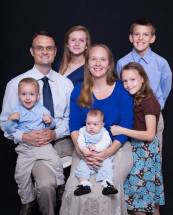
Five children later, I have no doubt when life and personhood begin. One who has a body is somebody, awesomely and wonderfully made, even in the womb.

If you are someone who made a different choice, and you feel convicted, please know that there is forgiveness with God, and healing for a broken and contrite heart. If you are in the midst of contemplating such a choice or know someone who is, know there are ministries such as the Crisis Pregnancy Center in the area where I live that can help you know all your options so you can confidently and confidentially choose life.

“If we confess our sins, he is faithful and just to forgive us our sins and to cleanse us from all unrighteousness.” 1 John 1:9 ESV


What it Takes to Ask: The Sermon on the Mount

Over the past few weeks I’ve been focusing on the wisdom of Jesus in sermons. Biblically  wisdom is more than simple knowledge of facts that would enable one to win at Trivial Pursuit or even just give intriguing talks like king Solomon. Wisdom, biblically, includes discernment between good and evil with a  view towards the appropriate course of action and godly living, the combination of knowledge and practice.

Although the wisdom of Jesus can be found all throughout the Gospels, and the rest of the Bible as far as that goes since he is the eternal Divine Word, the Sermon on the Mount (Matthew 5-7) is one of the most succinct summaries of Jesus’ wisdom teaching, which “astonished” the crowds (7:28-29).

To sum up his famous sermon, Jesus employs a parable of two different men, one wise, one foolish. Biblically, the fool is not someone who necessarily lacks knowledge, but one who fails to take the right course of action, what Jesus called the narrow way (7:13-14). In Jesus parable the wise man build his house on the rock, a solid foundation; the fool, on the other hand, builds on the shifting sands. The difference between the two is the wise one hears the words of Jesus and does them, the foolish man hears but does NOT do them. The later builds a life that cannot withstand the wind and waves of the coming judgment, whereas, the wise man will come through the judgment fine because of his solid foundation.

The words Jesus is referring to, most specifically in this context are the message he began to teach at the beginning of chapter 5, the beginning of the Sermon on the Mount. The wind and the flood waves represent the final judgment, with entrance into the consummated kingdom of heaven at stake, not just the loss of extra rewards. This is made clear by the context of the immediately preceding warning about how to know true from false prophets and the warning that not everyone who professes Jesus to be Lord will enter into the kingdom (7:15-23). In fact some will be turned away as “workers of lawlessness”in spite of their claims to have exercised mighty gifts in the name of Jesus. But Jesus said you will know them by their fruits, meaning obedience to his commandments, not by powerful gifts, which could just be lying signs and wonders (see Matthew 24:24; cf. 2 Thessalonians 2:9-12).

Also, it is likely that the winds and waves standing for final judgment has in view the flood of Noah’s day (Genesis 6-8), which Jesus would later use as an analogy for the final judgment yet to come (see Matthew 24:36-51).

Nevertheless, this little parable about the different building projects stands as the conclusion to the Sermon on the Mount, whose teachings make up the word of Jesus that the wise are to do. The significance of this is highlighted by the fact that He says, it is those who do the will of His Father in heaven who will enter into the kingdom of heaven (7:21).

A stroll through the Sermon on the Mount reveals what followers of Jesus are in terms of character, and how they should live as a result. The stroll doesn’t go on too long before you realize just how stringent the demands and expectations of Jesus are for his followers. Indeed the righteousness that Jesus demands of his followers surpasses that of some of the most devout religious people in his day, scribes and Pharisees, also a requirement for entering into the kingdom of heaven (see 5:17-20). Jesus didn’t come to abolish the law but to fulfill it, and see it fulfilled in the lives and lifestyles of his followers (cf. Romans 8:1-11, especially noting v. 4).

His followers will be those who are poor in spirit, meaning humble. They are those who mourn, over the sin and brokenness in the world, including in them. They are meek to the word of God rather than the wisdom of the world as they hunger and thirst for righteousness rather than madly craving that which gratifies the lust of the flesh and the lust of the eyes. They are merciful and pure in heart, not driven by self-promotion and self-gratification. They are peacemakers, reconciled to God and neighbor. Persecution and slander do not deter them from the narrow path because their eyes are fixed on the eternal prize. They are salt and light for whose sake the earth is preserved and whose good works reveal to the nations the light of the one true God.

They are filled with love, compassion, and forgiveness, not hate, contempt, and condemnation. They are sexually chaste, in thought and action, in singleness and marriage as they radically mortify anything that tempts them to sin. In marriage they commit to God’s design for one man and one woman for life, as long as they both shall live, not as long as they feel like, or not just as long as no one “better” comes along (cf. Matthew 19). Their honesty lacks no integrity; special oaths are never required as they make no concessions to the idea that sometimes one must lie to get by. They are not people of personal vengeance; neither do they love only those who love them; they love friends and enemies alike and pray for the forgiveness of their persecutors. Indeed they are “perfect” as their “heavenly Father is perfect.”

They give to the needy, and pray and fast not to be seen and praised by peers, but to be secretly rewarded by God. Neither do they live for greed; rather they live to serve God because they pray for His will to be done not their own. They do not live for material wealth or worldly comforts of any kind; instead they seek God’s glory and kingdom and righteousness, not their own comfort and convenience. They judge others rightly and humbly not hypocritically and self-righteously in order to restore never to condone sin or to condemn sinners. And they are judicious and cautious with the sacred things of God.

The level of righteousness that Jesus demands can easily leave one wondering, “who then can be saved?” as His own disciples were once left wondering (Matthew 19:16-26). Truly it is humanly impossible, but thank God, “with God all things are possible.” The inner dispositions and the outward behaviors, all of them, that Jesus demands of his followers are impossible. No one can live up to those standards; no one can be or live that way on his or her own in this fallen world. So what are we to do?

Earlier this week I went to the funeral of my mother’s sister-in-law’s sister. At the funeral my aunt’s son-in-law, who was a member of the same church as the deceased, helped lead the service. He shared his testimony, how he came to know the Lord. He said, for years he ran from the Lord and avoided church. In his early 20’s he pulled a tiny Gideon’s Bible from the sock drawer where he had tossed it years before when he brought it home from school. He had never even cracked it open until that day. He said, he began reading in Matthew and it wasn’t long before he was feeling incredibly convicted, guilty, and quite hopeless because he realized that he did not have any of those things that Jesus was talking about, an he certainly wasn’t living like Jesus said he should be living. As Tim talked about how he was feeling I knew he was probably in the vicinity of Matthew 5, 6, and 7. I had been preaching about these very things for the past couple of weeks. He felt totally helpless under the weight of conviction that Jesus’ sermon had put him under. He was left wondering, “How could I possibly be saved?” “What can I do?”

Then he read these words:

“Ask, and it will be given to you; seek, and you will find; knock, and it will be opened to you.  For everyone who asks receives, and the one who seeks finds, and to the one who knocks it will be opened. Or which one of you, if his son asks him for bread, will give him a stone? Or if he asks for a fish, will give him a serpent? If you then, who are evil, know how to give good gifts to your children, how much more will your Father who is in heaven give good things to those who ask him!” (Matthew 7:7-11 ESV)

God gives what God demands! The “good things” Jesus is referring to here are the qualities and dispositions that make up the character of his true disciples who do the will of God from the heart with pure, kingdom seeking rather than self-seeking, motives.

The good life cannot be bought in a store or found in worldly acclaim and prestige. Neither can it be found in how well you eat and what you wear, not in delectable delights or in fashionable fashions in clothing or housing. The good life that Jesus is talking about comes from a good heart with all the wonderful motives and dispositions that only God the Father can give. And all we have to do is ask!

But that’s easier said than done. Because we will not ask if we don’t think we need it. We will not ask if we don’t really believe it’s possible. We will not ask if we don’t really believe Jesus is telling the truth, if we believe He is actually a liar or a lunatic rather than the Lord. In other words, we won’t beg and plead with God until we come to see that we are just poor, miserable, helpless and hopeless (in terms of self-sufficiency) beggars. But that’s what it takes to ask.

If we do ask, however, we will receive; if we will humbly seek, we shall find; if we do knock, God will open the door to the storehouse of heaven’s good things, starting with forgiveness, new birth, His righteousness, and the Holy Spirit and ending with the kingdom of God in the New Heaven and Earth.


Bearing Burdens without Being Crushed

Do you ever feel overwhelmed? You might be thinking I might as well ask if you ever get out of bed in the morning. Of course, all of us at times get overwhelmed! Hopefully, not every time you get out of bed, but some of us do go through those seasons in life.

Life, like grapes, comes in bunches, and it sometimes, perhaps, feels more like “the grapes of wrath” than a relaxing glass of wine, or for us non-drinkers a refreshing gulp of grape juice. Things can pile up in a hurry right next to a huge pile of angst, worry, and frustration. Sometimes the worries of the day at hand get compounded by worry over the demands of the days ahead; some days can leave us feeling perturbed, perplexed, and even powerless, wondering why life has to be so hard. Maybe, it’s supposed to be to remind us that the weight of the world is too much for us to bear; that there are some things that we just can’t bear alone.weight_of_the_world


Feeling overwhelmed reminds us that we are human, we are very finite creatures with limited strength and ability, and we need help, from God and neighbors. The first thing I do when I feel overwhelmed is turn to God in prayer. Often I immediately feel the burdens lifted, knowing that “God is our refuge and strength, a very present help in trouble” Psalm 46:1 (ESV).

Burdens come in many different shapes and sizes, different for different people depending on one’s circumstances and vocation, but with commonalities to us all. The privilege of being a husband and a father of five, as I am, comes with wonderful blessings, more than I deserve, but it also comes with the weight of responsibility. That weight alone, well …, it can weigh on you to the point of strain. Then I am also a son, the only child, of a wonderful woman, now an elderly widow and physically quite feeble, who relies on me. And, of course, I am a pastor and a preacher, with all of the joy that comes with it, there is still the weight of significant responsibility, first of all before God, and to the people to and with whom I am in ministry. By God’s grace, as 2 Timothy 2:15 says, I have tried to fulfill my ministry responsibilities with the goal of standing approved before God, knowing and experiencing the fact that this means being rejected by the world and the worldly within the church.

As a pastor and preacher, a naturally introverted one at that, I have felt the weight of the normal duties of the calling, hurting with the hurt, binding the wounds of the wounded, sharing the burdens of the weary in prayer and counseling, warning the wayward. Then there is also the extra burden of concern over the incalculable number of potential ways someone may be offended, including at some of the most raw and sensitive times of life. And, of course, there’s the pressure to produce professions of faith and increase attendance and support for the church, even though the only thing we can do is sow the word and water it, not change hearts so that it can grow, because only God can give the increase (1 Corinthians 3:6-7).

That being said, in terms of preaching and teaching, and writing as far as that goes, I do not do it to make people comfortable with sin; I do it to make people uncomfortable with sin so they will flee from it to find comfort in the forgiving and life-transforming loving arms of God the Father through Jesus Christ. I know this won’t land me a show with Oprah; it won’t even win me applause among the majority of the leadership in my own denomination. If ministries were measured by the number of “likes” on social media mine would be an abysmal failure, but we are to seek the glory that comes from God, not the applause of peers in particular, or people in general (John 5:44). Standing on the word of God leaves one stepping on a lot of toes, as they say.

All of these things, not to mention my own sin and brokenness, weigh on me. At times it has been gut-wrenching, sometimes neck-knotting, other times spine-crushing, sometimes all of the above at the same time, overwhelming to say the least. But when I am overwhelmed, I turn to God, who is my refuge and strength (Psalm 61).

It’s not that God takes the demands and responsibilities away, but He does at times take away the extra burden of fear and anxiety that make our rightful responsibilities too heavy. Sometimes God to takes these away; but God does even more, He also gives us strength and help, which at times enables us to continue even with the fear and anxiety. In reality, without Christ, we can do nothing (John 15:5); with Him, we can do all things (Philippians 4:13).

In the spring of 2012 I was trying to finish up my last semester of Divinity school, while pastoring a church. My wife was suffering terribly from depression, which required hospitalization. She had battled depression off and on for many years; we had been through a couple of very dark episodes before. I had exams and papers, pastoral responsibilities, at the time three children to console and take care of, and a move to plan for, including moving my mother, all with a wife who was very, very ill.

Regrettably, much of what we were going through was due to my own neglect, and even resentment, of my wife’s illness. Because of busyness and some stubbornness  I hadn’t done a very good job of helping her with her burdens, which brought me an extra burden of guilt. Just a couple of months after, Christi, was hospitalized we made a move to another church half way across the state. In the meantime I had to move my mother a number of times before finally securing her a place to live near us. The church I was appointed to was in the midst of a major crisis of its own, financially and otherwise, as many churches are now a days, and my denomination was and still is coming apart at the seams. In the midst of these circumstances I believe God called me to take a public and clear stand on controversial issues in a denomination that seems to be able to bear a lot of things but the truth.

Only by the grace of God have I not been crushed under the pressure (2 Corinthians 4:7-18). God’s grace has been sufficient, but quite often it has come through the hands and feet and words of comfort and confidence of God’s people, sometimes from remote and unexpected places. I could not have made it without the prayers and help of neighbors and brothers and sisters in Christ.

God just doesn’t work directly in us; often God’s help and strength come from a neighbor and fellow follower of Jesus in the body of Christ. By the Holy Spirit God works in one person not only for the blessing of that individual but to bring aid, strength, and help to others. That’s the beauty of the body, the head of which is Christ, “from whom the whole body, joined and held together by every joint with which it is equipped, when each part is working properly, makes the body grow so that it build itself up in love” (Eph 4:16). We certainly need God but God chooses to work through others, so we also need each other. We need to help each other; and also to be helped by each other.

Lent leading up to Easter reminds us that there are some burdens too heavy to bear, some too heavy to bear at all. Our most threatening burden, the burden of sin with its legal demands, debt, and debilitating effects were lifted from us at Calvary, high up on the cross of Christ Jesus. The one who “has borne our griefs and carried our sorrows” (Is 53:4) will also work in us so that we too can “bear one another’s burdens, and so fulfill the law of Christ” (Gal 6:2).

1 John 3:16 “By this we know love, that he laid down his life for us, and we ought to lay down our lives for the brothers.”

Faith in the Beginning

“I just can’t believe that.” So said an older gentleman in a small group I was leading several years ago. We were discussing the first three chapters of Genesis. Fast forward a few years, and on the same day someone over 70 and someone under 17 expressed similar doubts about the story about the beginning in the book of Genesis.

The truth is if we have trouble believing in the Genesis accounts of the beginning, we’re very likely to have trouble with John’s account of the same, which includes the Word who was in the beginning with God and, indeed, was very God, through whom all things without exception, as John so emphatically states it, came into existence, who also became flesh, fully human, and died and rose again to save the world he had created from sin (John 1:1 …).   big-bang

Much of the time the problem is the assumption that the Genesis accounts must be interpreted in an absolutely literal or an absolutely symbolic way. There’s also sometimes the assumption that one has to choose between the Genesis accounts of origins and modern scientific accounts. The later is no doubt in part due to many in the scientific community who pit science against Christianity; but also, in reaction to those who choose to use science as a weapon against Christianity, some in the Christian community buy into this dubious dichotomy as well.

It’s also not a choice between either a simple literal interpretation and a symbolic figurative one. Sometimes people will insist that they only take the Bible literally, others will insist they don’t take it that way at all, they read it all metaphorically. In both cases, perhaps a bit ironically, neither party is likely to be speaking wooden literally about how they actually read Scripture; or they are confused or simply not telling the truth. This is another false choice. What is meant to be read literally should be; what is meant to be read figuratively should be as well, although discerning which is which can be tricky.

Sometimes when something is indeed taken figuratively, it seems some assume that means it doesn’t have to be taken seriously. Actually, the opposite may very well be the case. Figures of speech, of which the Bible is filled with many dozens of different kinds, often add even more emphasis to what is being stated. For example, when Jesus says “if your right eye causes you to sin, cut it out” (Mark 9:47), he’s not speaking literally, but he is speaking quite emphatically by way of a form of hyperbole about the seriousness and danger of sin and how his disciples should respond to temptation. Because something is figurative doesn’t mean that it doesn’t refer to something very, very real, whether it be something concrete like the human body or something more abstract like love and mercy.

So we shouldn’t assume the origin account must be read in a rigid literal way, but neither should we assume the figures of speech and symbolism mean there are no referents in reality, physically, metaphysically, or historically.

Neither should we assume that Genesis intends to tell how the universe was created in the same way a modern astrophysicist or biologist might. Story telling is an art, but the way a story is told will depend on who is telling it and for what purpose they are telling it. I might tell a story about how my wife went to the grocery store a bit differently from how an automotive engineer might tell the same story, depending on the purpose for telling it, especially if the engineer was telling it for a documentary on how cars and combustion engines work. Similarly, the late ESPN commentator, Stewart Scott, might tell the story of how the Duke-UNC basketball game turned out, differently than the coaches might tell it. You probably wouldn’t hear the later use the word, “booyah”, “dadgum” maybe, from Roy Williams at least, but not booyah. Scott would focus more on top plays and use more colorful expressions to describe them; coach K and coach Roy, might refer to more subtle statistics in much less dramatic fashion, at least on TV, but no one would doubt they were all talking about the same game, which actually happened.

Just because Genesis tells the story of the origins of the universe and life on earth differently from the way an astrophysicist or biologist might in a scientific documentary doesn’t mean they are telling contradictory stories; indeed they may be much more complimentary than some would like to admit. The intent and the focus may be different, but that doesn’t  make them contradictory or competing. In general terms, the Genesis account of origins focuses on the who and why of creation, and modern scientific accounts on the what and how, even though this is not to say there is no overlap between them.

What is interesting, in spite of the belief among many today that science and religion are in a fight to the death, at least in terms of the creation-evolution debates, before the 1920’s and the Scopes trial, prominent Christian scientists and evangelical Biblical scholars and theologians were not as alarmed by theories of evolution as some may suppose. Harvard professor Asa Gray, the most prominent Botanist of the nineteenth century, saw in Darwin’s “Origin of Species”, which he helped to get published in the United States, evidence of God’s grand design and purposes, even though he had qualms about the suggestion of randomness in natural selection and rejected transmutation of species. Darwin insisted to his helpful  colleague that his theory in no way demanded atheism and believed himself that one could be a theist and an evolutionist.

Neither did some very early prominent fundamentalists have a problem accepting Darwin’s theory of evolution. Alister McGrath, theologian and former Marxist atheist, who holds three doctorates from Oxford, one in molecular biophysics, reveals that even a classical fundamentalists like Benjamin B. Warfield believed “the Darwinian doctrine of natural selection could easily be accommodated by evangelicals as a natural law operating under the aegis of the general providence of God.” The twentieth century evangelical theologian, J.I. Packer also followed Warfield in this regard, insisting that he saw nothing in the first chapters of Genesis or anywhere else in the Bible that would bear one way or the other on the theory of evolution (McGrath, Christianity’s Dangerous Idea, p. 382). Some of my conservative evangelical friends have been surprised to find out that conservatives like pastor and theologian, Timothy Keller of Redeemer Presbyterian Church in New York (read Keller’s take HERE), have similar beliefs, as does renowned biblical scholar N.T. Wright, and as did C.S. Lewis.

Obviously not every conservative theologian would agree; and there are other very serious scholars and intelligent design proponents including the Christian, Stephen Myer, and the agnostic, Michael Denton, who have major qualms about Darwinism for scientific reasons.

Even atheists like Richard Dawkins and Fred Hoyle have admitted that the universe at least gives the very strong appearance and impression of design and purpose, yet insist that it only appears that way. But it can’t be science itself that leads them to that conclusion, despite the fact that so many scientists seem to believe that it does. That is their belief, not an established scientific fact, even though that belief is often misleadingly presented in terms of scientific fact. They have a commitment to, even a faith in, philosophical naturalism. But it is not irrational for one to conclude from the appearance of design and purpose that there is in fact real design and purpose and therefore an intelligent designer, who may or may not have used the process of natural selection leading to macroevolution to create biological life forms on the earth.

Francis Collins, who headed up the project to map the human genome, and also a Christian, believes in a personal God who raised Jesus of Nazareth from the dead and created life on earth through evolutionary biological processes. If the universe appears to be fine tuned with scores of physical constants being exactly what they should be to support life, and not just any life, but specifically human life, then why not believe that there is really a design and purpose, and therefore real meaning to life?

In public appearances militant atheist, evolutionary biologist, and author of “The God Delusion”, the aforementioned Richard Dawkins, insists that the universe has“no design, no purpose, no evil and no good, nothing but blind pitiless indifference” (as quoted by McGrath). Again this is not a scientific conclusion, but a philosophical belief, which is beyond the realm of scientific investigation. Alister McGrath says, “I suspect that the real problem for Dawkins is that he is worried that the universe might turn out to have a purpose of which he does not approve” (Surprised by Meaning, p. 4 Kindle).

Interestingly enough, in a debate with professor John Lennox, Dawkins conceded something that indicates McGrath’s hunch may indeed be well founded. In that debate Dawkins said to Lennox:

“You could possibly persuade me that there was some kind of physical, mathematical genius who created the expanding universe, devised quantum theory, relativity and so on. But that is radically and fundamentally incompatible with the sort of God who cares about sin, the sort of God who cares about what one does with one’s genitals, the sort of God who is interested in one’s private thoughts and wickedness. Surely, you can see that a God who is grand enough to make the universe is not going to give a tuppenny cuss about one’s thoughts and sin.” – Watch debate HERE. transcript HERE

The context of Psalm 14:1, which says, “The fool says in his heart there is no God” indicates a connection between the denial of moral accountability before God and immorality and sin itself. It’s easier for sinners to believe in no God at all or an impersonal God to whom they won’t actually have to give an account, than a personal God who cares about how we live, even what “one does with one’s genitals.”

Interestingly again, a pastor colleague of mine told about a conversation with someone who objected to a message he had given on the importance of traditional Christian sexual ethics, which precludes sexual activity outside of the marriage covenant of one man and one woman, the gentleman’s objections to what the New Testament says about sex in Romans and Corinthians ended up with objections to what the Bible says about the beginning in the first few chapters of Genesis. Ironically, though, New Testament sexual ethics is grounded in what is stated there in the first few chapter of Genesis, such as what Paul says in Romans 1 about homosexuality and what Jesus says about marriage and divorce in Matthew 19 and Mark 10, where he specifically references Genesis 1:26 and 2:24 to explain God’s original design and intent for marriage.

My own conversations with people in the church who doubt New Testament claims like the virgin birth and the resurrection when pressed usually reveal serious doubts about what is said in Genesis about creation. In one conversation when someone voiced disbelief in the virgin birth and resurrection, I simply asked if he believed that God created the heavens and the earth. Initially he said he did. Then I asked what would be more difficult for God, to bring about a virgin conception in the womb of one woman and give new life to one man who had been dead or to create all that is out of nothing. To believe the the later, but not the former would be like believing someone built the Taj Mahal, but the same person couldn’t have built a bird house. The truth is he was having a hard time believing in a God who created everything seen and unseen out of nothing in the beginning and who would one day judge the world. Thankfully, I believe this very intelligent gentleman eventually came to believe the gospel.

So faith in Jesus may very well be inextricably connected with faith in the beginning as recorded in Genesis. Faith in the beginning may be the beginning of faith. It is Genesis that reveals the single all powerful and sovereign God who simply spoke everything into existence without the cosmic battle between capricious gods and unruly matter that one finds in pagan myths such as the ancient Babylonian one, which was contemporary with Genesis. And this God in Genesis created humans not as an accident or an afterthought to be slaves of the gods in the heavens and their tyrannical counterparts on earth. Instead with deliberation this one God created human beings with tremendous dignity in his own image to have dominion and to rule and reign over the earth under his own authority as vice regents and stewards to spread God’s glory over the face of the earth. But something went terribly wrong, sin entered the world through human rebellion, a problem for which the whole creation still groans in disequilibrium for its ultimate solution (see Romans 8:18-30).

As Alister McGrath says, “Christianity does not simply make sense to us; it also makes sense of us.” (Surprised by Meaning, p. 114). It makes sense of where we came from, why we are here, what is wrong, what it takes to make us right, and how all things will eventually work together for the good of all those who believe in and love the God who made us and redeemed us. Indeed, faith in the end begins with faith in the beginning.


From the Ashes …

We begin in the mud of ashes, a journey in the dark shadow of the cross, knowing it’s a shadow cast by the glorious light of the resurrection. Why begin Lent with ashes?ashes_6329cnp

In the Bible ashes, often paired with sackcloth, a coarse and uncomfortable material, symbolize repentance, humility, and/or mourning in the aftermath of disaster or impending potential doom. Upon encountering God after seriously questioning God’s justice in the midst of his own great suffering, Job repents in dust and ashes. The king of Nineveh, with Jonah’s reluctant pronouncement of looming judgment, fasted in sackcloth and repented in ashes. Ashes remind Christians of some of the first words of our Savior’s preaching, “Repent and believe in the gospel” (Mark 1:15).

Ashes also remind us of the righteous judgment of God that stands against us because of sin, as well as its penalty, which is death. The penalty for rebellion against God’s law, is “you shall surely die” (Genesis 2:17). Although physical death is included, the worst of it is spiritual death, being cut off from God, the source of life and blessing.

Accepting the black mark of ashes on our forehead at the beginning of lent symbolizes our acceptance of the righteous judgment of God against us as sinners. It is to confess, as did Daniel on behalf of Israel as he sought God’s face through prayer and fasting in sackcloth and ashes, that we were and are wrong to break God’s commandments and that God’s judgment against us is right and just (see Daniel 9:3-19).

Nevertheless, the mark of the ashes in the sign of the cross reminds us of God’s mercy because His only Son, the perfectly holy and righteous One, took the penalty that we deserved and “bore our sins in his own body” (1 Peter 2:24) with the result that we who were spiritually dead in sin received new life through forgiveness by the canceling of the debts and just legal decrees that stood against us, which “he set aside nailing it to the cross” (Colossians 2:13-15).

The mark of ashes also reminds us of our need to take up our cross daily, to die to sin, to “put to death” any lingering attachments to the old age, the fallen world that is passing away, and any remaining corrupt desires and habits of our old selves before we were born anew into the kingdom of God (Colossians 3:1-17). We engage in this discipline of lent, not to be saved, but because we are saved; and because we are saved, we know we are being saved daily as we grow into “the holiness without which no one will see the Lord” (Hebrews 12:14).

The ashes remind us that “in the midst of life we are in death.” The sign of the cross reminds us that “our help is in the name of the Lord who made heaven and earth” (Psalm 124:8). It is He who sent his very own Son to die for us so that we could live for Him.

In Christ we can live as those who are prepared to die, to die daily to sin, and, therefore to die in hope at our appointed day to stand before the judge of all the earth (Hebrews 9:27). We die in the black shadow of the cross but also in the light of the resurrection. When we are prepared to die; truly we are prepared to live, knowing that the one who formed us from the carbon dust of creation to begin with will from the ashes and dust of death raise us to new life, daily, and on the last day. Are you prepared to die?

This lent with my cross, I also plan to take up more often my pen and laptop to write, at least weekly to be specific. This won’t be an easy commitment for me, a husband and father of five and an only child of an elderly mother, and a pastor with all of the unexpected that comes along with the normal routine. Writing for me sometimes, perhaps most of the time, also comes with great difficulty, partly because of ADD, and partly because of anxiety about how it will be received. The later is not only because of how it will be received by human readers, but also by God.

For more than one reason I write with fear and trembling. I write and speak knowing that it is more important to please God than people, yet I do so with the desire to inform and see lives transformed through the Word of God as it is conveyed through this very fragile, and sometimes empty-headed, vessel. My prayer is that my increased productivity with the keyboard will be honoring to God and a blessing in some way to His people.

May this season of Lent be a period of accelerated growth for the elect and God’s kingdom.


Faith and Scripture

Jesus calls for others to believe in him, to trust him. In John 14:1 he says, “Believe in God; believe also in me.” You see this, as well, throughout each of the four Gospels, whether it be calming a storm on the sea, healing the blind, the sick, and the demonically oppressed, or in his warnings to his disciples about coming persecution. Would be disciples of Jesus are called to trust in him personally. Matthew 28:17 shows that after his resurrection this call to faith culminated in his disciples worshiping him, though some initially lingered in doubt, Thomas the most famous among them (John 20:24-29). John makes it clear that this was the very reason he wrote his Gospel. John 20:31 “but these are written so that you may believe that Jesus is the Christ, the Son of God, and that by believing you may have life in his name” (ESV).

The life of which John speaks is the abundant life, the eternal life, which, for the one who believes, begins in the present. It is a real foretaste of the glory of the life to come in the fullness of the kingdom of God with its corresponding joy in the here and now. Hallelujah! Faith in Jesus allows us to receive and enter into God’s kingdom even now, but it is a faith in Jesus as he is revealed to us in the Bible. Faith in Jesus will also require trust in scripture as it describes and points to Jesus, the Word of God made flesh who reveals the Father and His will (John 1).

Inevitably, therefore, the question of whether we should trust Jesus will bring us to the question of whether we can trust the canonical written accounts of his life, ministry, death, resurrection, ascension, and promised second coming. This especially includes the Bible’s claims about his significance “for us and our salvation,” to quote the Nicene Creed. Can we trust the Bible? A question that is really at the crux of much controversy and conflict in the world, even in the Church, today.

One of the central claims of Islam found in the Quran, for example, is that the Bible has been corrupted by Jews and Christians and can no longer be fully trusted to reveal the truth about who Jesus really is or what God is really like. Initially, it seems, this may have been understood to mean that Jews and Christians had just misinterpreted the original meaning of the Old and New Testaments. Eventually Muslim scribes and scholars would argue that the biblical texts themselves had been altered from their original message and therefore have been corrupted. Joseph Smith, the founder of the Mormon church, many centuries later, would make similar claims regarding the relationship of the Book of Mormon to the Bible. The founder of The Way International, the group I was once involved with, also made similar claims, that the Bible had been misinterpreted by orthodoxy and that many passages in English translations had been intentionally corrupted by conspiratorial Trinitarian translators. He penned a little booklet called, “Forgers of the Word” where he leveled these charges. He also gave his own “translations according to biblical usage,” as he called them, that drastically altered the traditional understanding of passages like the one found in John 1 in other publications.

Many others in various forms and for a variety of reasons have made similar claims, questioning either the mainstream orthodox interpretation of the Bible, or the reliability and truthfulness of the biblical texts themselves. Some don’t doubt that the Bible says what it’s original writers intended to convey as much as they just doubt the Bible accurately reflects who Jesus really was and what God is really like, if they believe God exists at all. In some cases the doubt is only centered around certain parts of the Bible, in others the entirety of the Bible’s depiction of Jesus and God generally is suspect.

Saint Irenaeus in the second century contended with those who, apparently, initially tried to argue from scripture that Jesus was a being quite different from the one that the universal church had come to believe in, and that the God revealed in him, according to the writings that would come to be included in the New Testament, was different from the God revealed in the pages of the Old Testament. In other words, they at first, it seems, claimed that the Jesus described in the New Testament revealed a God of compassion and mercy that was different from the God of wrath and vengeance found in the Old Testament. They also denied, according to their Gnostic worldview, which discounts the value of the physical world as an illusion from which we need to be set free, that Jesus was really human. Traces of some of these ideas can be found being opposed by the apostle John in 1 John, where he warns the church to be discerning, to “test the spirits” because of the false prophets who claim that Jesus did not come in the flesh (1 John 4:1-3). From what Irenaeus says they at first try to make their case from scripture, but when they cannot sustain their arguments from the scriptures they resort to attacking them  to justify holding to their unbiblical beliefs.

“But when they are refuted from the Scriptures they turn around and attack the Scriptures themselves, saying that they are not correct or authoritative, that they are mutually inconsistent and that the truth cannot be found from them by those who are not acquainted with the tradition.” (Saint Irenaeus, Against Heresies III, 2.1)

This is a common pattern that comes up again and again throughout history. You see it with the rise of Islam and the claims of its prophet Muhammad; you see it in the claims of the Mormon prophet Joseph Smith and various other movements, religious and political, that have sprung up over the centuries to challenge the longstanding interpretations of the Bible, and/or to challenge the authenticity or the truthfulness of the claims of the Bible itself. You see it in the scholarly movement called “The Jesus Seminar,” which paints a portrait of the so-called historical Jesus that bears barely even a faint resemblance to Jesus as he is actually described in the New Testament. While the Gnostic Jesus only appeared to be human, the phantom of “The Jesus Seminar” was entirely and utterly human, but none too prophetic, at least not in the Jewish and early Christian apocalyptic sort of a sense. The same pattern can be found in contemporary “progressive Christian” movements that inevitably end up progressing beyond the Bible, at least those portions they deem distasteful.

Nevertheless, the Bible as we have it must be the measure and standard for any claims to faith in Jesus. If we are going to trust Jesus and faithfully follow him we must trust the documents in and through which he is revealed. Thus, you will find throughout the history of the Church, statements about scripture which indicate its function as a guide and rule for what is genuine Christian faith and practice.

Referring to the writings handed down from the apostles or their close associates, Irenaeus said:

“All of these handed down to us that there is one God, maker of heaven and earth, proclaimed by the law and the prophets, and one Christ the Son of God. If anyone does not agree with them he despises the companions of the Lord, he despises the Lord himself, refusing his own salvation, as all the heretics do.” (Against the Heresies 1.2)

Here Irenaeus not only holds up what would become New Testament scriptures, but, importantly, also those writings with which they were in harmony as they unveil their fulfillment in Jesus Christ, namely the law and the prophets (i.e. The Old Testament). In the conclusion of his work, “On the Incarnation,” Athanasius, the fourth century defender of the full divinity of Jesus against Arius and his associates who declared that prior to his incarnation Jesus as the Word of the Father was the first created being who then created all other things, invites his readers to prove the truth of what he had written “by the study of the scriptures”, which he declared were inspired by God. The same must still be done today by orthodox believers in the face of the claims of Arius’s modern heirs like the Jehovah’s Witnesses. The articles of religion (Articles 5 & 6) and confession of faith (Article 4) for my own denomination, the United Methodist Church, express this same idea, that the scriptures of both the Old and New Testaments, which are explicitly declared to be in harmony, are to be the ultimate standard and guide for faith and practice.

Church fathers like Irenaeus and Athanasius didn’t develop this idea of testing claims by scripture on their own. They rightly discerned this rule from the Bible itself, even from Jesus himself, that is as he is revealed in the pages of the four canonical Gospels. Matthew and Luke tell us that Jesus birth and events surrounding it fulfilled scripture. Jesus fended off the attacks of the devil himself, who confidently, albeit wrongly, referenced scripture as one of his tactics to deceive, by quoting scripture as it was meant to be understood in its proper context (Matthew 4 & Luke 4). He also chastised religious leaders not for adhering to the law, which he himself knew to be the word of God, but for rejecting the word of God in favor of their traditions, which Jesus judged to be contrary to the original intent of the law (See Mark 7 & Matthew 15). In one confrontation with religious leaders who were judging him by their traditions, Jesus said, “Well did Isaiah prophesy of you hypocrites, as it is written, ‘This people honor me with their lips, but their heart is far from me; in vain they do worship me, teaching as doctrines the commandments of men.’ You leave the commandment of God and hold to the tradition of men” (Mark 7:6-8 ESV).

Unquestionably, Jesus, as he is revealed in Matthew, Mark, Luke, and John had the highest regard for scripture, the law and the prophets. He knew them to be the very word Jesus pointing to scrollof God and he believed himself to be the one in whom they find their ultimate meaning and fulfillment. He courageously allowed his own arrest and went to the cross that the scriptures might be fulfilled (Mark 14:48-49). After his resurrection he lovingly reproved his disciples for being “slow of heart to believe all that the prophets have spoken” (Luke 24:25). Then he took them on a journey through the law, the psalms and the prophets, the whole Old Testament. This helped them to understand the scriptures so they could know him and understand who he really is and what his life, death, and resurrection mean for their salvation and for the salvation of those to whom they would be witnesses (see Luke 24 and Acts 1).

His apostles and those who would come to believe because of their testimony and preaching would continue to state the importance of testing all things by scripture. In Acts the Bereans are held up as a model for all believers in that they eagerly received the word, and also examined the scriptures daily to authenticate the preaching and teaching of Paul and Silas (Acts 17:10-11). In 1 Corinthians Paul, in defense of bodily resurrection, reminds them, with what was apparently a confessional statement handed down from the first apostles, that Jesus’ death, burial, and resurrection happened “in accordance with the Scriptures” (15:3-4). Moreover, in his second letter to Timothy, in the context of warnings about false teaching and false teachers (2 Timothy 3:1-9), Paul encourages Timothy to continue in the scriptures (here the OT), “which,” he says, “are able to make you wise for salvation through faith in Christ Jesus” (v. 15). Timothy can trust scripture as a reliable and trustworthy guide and standard by which not only to test the claims of false teachers but also by which to live a godly life and to help others do likewise. Why? For “All Scripture is breathed out by God and profitable for teaching, for reproof, for correction, and for training in righteousness, that the man of God may be complete, equipped for every good work” (v. 16-17).

papyrus p66 JohnCan we trust the Bible? Jesus thought so, and so did the apostles; and they were referring to the still much maligned Old Testament! As mentioned above some will wonder whether we can trust the Bibles we have today to say what was in the original manuscripts, which are no longer in existence. With only a few significant exceptions that don’t affect any major Christian doctrines, which are usually noted and explained in newer English translations, experts who study and compare the thousands of manuscript copies assure us that we can be confident that what we have now reliably and accurately reflects the original manuscripts.

But can we be confident that the Bible accurately conveys the truth about who God is and the life and significance of Jesus of Nazareth as the Messiah and Son of God. In more personal terms should we trust the Bible with regards to Jesus’ significance “for us and our salvation,” what we should believe and how we should live. Jesus and his earliest apostles believed that to be true for the Old Testament, the law, psalms, and prophets. The early church fathers after the apostles believed that to be true of the Old Testament as well, and also for the testimony of the apostles of Jesus handed down in the documents that would eventually comprise the New Testament. Again, they believed the New Testament to be in harmony with the old, a harmony that Augustine tried to express in the dictum, “In the Old Testament the New is concealed, in the New the Old is revealed.” This is like the relationship between a seed and its mature fruit.

Because they believed the Bible was inspired by God, church fathers like Augustine believed the Scriptures, Old and New Testaments, to be completely truthful and trustworthy, even without error or superfluity, the later meaning the Bible doesn’t contain anything that it shouldn’t. In a letter to Jerome, who translated the Bible into Latin, Augustine said referring to the canonical books of scripture that he believed the authors “were completely free of error” and that of these book alone he was bound to submit to their teaching without suspicion of the slightest mistake or intent to mislead. If he found something therein that seemed to be at odds with the truth, what he would call the analogy of faith, the entirety of the harmonious teaching of all of Scripture, he would assume either a copyist’s error in the manuscripts, an unclear translation, or an error in his own understanding. Thus he trusted that the original manuscripts would have been without error. It was a matter of faith based on the best available evidence.

Church historian, J.N.D Kelly (Early Christian Doctrines, 1978) says, “it goes without saying that the fathers envisaged the whole of the Bible as inspired,” which led to the view that it was also without error and that not even a “jot or title” according to Origen or a “syllable, accent, or point” according to Jerome is superfluous. In the 18th century, the founder of the Methodist movement, John Wesley, echoed these convictions in a sermon warning about the dangers of downplaying or ignoring passages that speak against “fashionable sins” by saying the Bible is “unquestionably true” and that there is nothing superfluous in it, relating either to faith or practice” (“On Corrupting the Word of God” Sermon 136). In his preface to his explanatory notes on the Bible Wesley said:

“The Scripture therefore of the Old and New Testament, is a most solid and precious system of Divine truth. Every part thereof is worthy of God; and all together are one entire body, wherein is no defect, no excess.”

Its unerring truthfulness cannot be judged by any outside criteria, neither can it be perfectly explained or comprehended without running into paradoxes, which are also inescapable with other major Christian doctrines like the Trinity and the incarnation and predestination and free will. The reliability and truthfulness of the Bible can only be experienced as we seek to master it and in the process find ourselves mastered by it as it leads us to daily surrender at the foot of the cross. All of it is inspired, and therefore without defect; thus, all of it is profitable for us and our salvation; none of it is to be disregarded, certainly not discarded.

As Augustine said, “If you believe what you like in the Gospel, and reject what you don’t like, it is not the Gospel you believe but yourself.” Without the whole thing, you won’t have the real thing, and it’s only the real thing that is “the power of God unto salvation to everyone who believes” (Romans 1:16). In light of John 5:39, I don’t think John would mind me saying, these, all of the scriptures, were written “so that you may believe that Jesus is the Christ, the Son of God, and that by believing you may have life in his name” (John 20:31).



The Power to Become

Tis the season for New Year’s resolutions. Self-improvement is in the air; weight-loss and exercise equipment commercials on the air waves. Many realize the need and long for the possibility of becoming better than they are right now in some form or fashion. Some out of concerns for personal well-being, others out of concern for deeper and healthier relationships. There’s a general sense that we can be and should be better than we are.

There’s a wonderful promise in the Gospel of John. It comes right in the middle of the opening prologue which extols the greatness of the divine Word Who became flesh bringing grace and truth and revealing God.

John 1:12 “But to all who did receive him, who believed in his name, he gave the right to become children of God,” (ESV)

In our own power we only have the power to be, through faith and trust we have the right and, with it, the power to become something else, something far greater. In ourselves we can only be who and what we are, but through the power of God in Christ we can become not just better, but new – a new creation in Christ (2 Corinthians 5:17). In ourselves we can only be sinners, as John would put it, “children of the devil” (see 1 John 3); in Christ we become saints, children of God. Thank God for the power to become!

Some don’t see the needed change as being this drastic. It’s easy for us to admit that we are weak, but very hard to admit that we, in ourselves, are wicked. We are weak, but the Bible says we are weak because we, in ourselves, are wicked. Sin is nothing to be taken lightly. We need more than just another self-help guru; we need a Savior. In Jesus Christ we have one.

Once when leading a small group discussion I asked whether the concept of sin was obsolete in modern society. Many said, yes, but only because they had a very superficial theoretical understanding of the concept. Sin isn’t the breaking of arbitrary, insignificant rules, but living in such a way as to put us in conflict with the will and designed purposes of our Creator and our fellow human beings. Moreover, sin isn’t just the breaking of rules, but the power that renders us broken, even dead spiritually, incapable of even acknowledging God much less obeying Him. Sin is the evil force within us that keeps us focused only on ourselves. And it’s not just the bad things that we do to ourselves and others, but also the failure to do good for ourselves and others. Sin puts us at odds with God and each other, but by the grace of God faith in Jesus reconciles us to God and each other.

So that feeling that we should be better than we are is on the right track, but it even greater than some might imagine. In ourselves we are powerless to become anything other than what we are. Of course, by the general grace of God we can be better sinners, better in the sense of mitigating the immediate harmful effects of sin, but only by the special grace of God in Christ can we become saints, children of God.

It is the gift of forgiveness and new birth, available to all, but even a gift still has to be received. We receive it by faith, by believing that we really need it and by trusting in what God has done for us in Christ, by placing our lives in His hands to be transformed. As the Charles Wesley hymn, “O For a Thousand Tongues to Sing” says, “He breaks the power of canceled sin, he sets the prisoner free …” The grace of God, which is what God has done for us in Christ, cancels the penalty and debt of sin that hangs over us, and it also breaks the power of our brokenness, the power of sin within, freeing us for joyful obedience to God. This blessing we receive by faith, which changes our status from sinner to saint, child of the devil to child of God, and it changes our hearts from lovers of sin and self to lovers of God and neighbor, including our enemies. The grace of God received changes us from the inside out, and it’s not just a spiritual change, it is a change that will affect our whole being, spirit, soul, and body in a positive way (see 1 Thessalonians 5:23).

Sin leaves us plagued with fears, anxieties, jealousies, anger and bitterness, as well as self-destructive compulsions and addictions. These addictions are often to substances from without, sometimes to pleasures from within. Sin renders us prisoners of our own wayward and corrupt desires and corrosive emotions, spiritually cut off from God. From this state only God can set us free.

opening jail cell

Early in life Jerry found himself addicted to booze and bets. It wasn’t long before he himself became a bookie, not long after that a pimp. One day his life was threatened by someone whom he owed money. In a rage he went home to get his gun, with which he was determined to kill the man who had made the threat. As he pulled the gun from the metal box he kept it in, he became terribly frightened by the darkness of evil that had engulfed him and then incredibly ashamed of the depths to which he had sunk. Then he remembered his grandmother praying over him when he was a boy, and he called out to the one she had taught him about, Jesus Christ, to save him. Then and there he was forgiven for all that he had done, and he was set free from the evil that had a death grip on his heart. He was filled with an overwhelming sense of peace and joy. He ran out into the front yard shouting for joy and praising God to the top of his lungs. Neighbors and bystanders looked at him as if he had lost his mind. He had. He lost his mind, but he received the mind of Christ!

There are no depths of darkness which are too deep, no sin too bad, no fear, anxiety, resentment, or addiction too strong for the grace of God in Jesus Christ or for those who receive him and believe in his name. “… his blood can make the foulest clean; his blood availed for me.” Thank God for the power to become! Happy New Year!


Not Overreacting to Terrorist Attacks

Cliff Wall's avatarumc holiness

In the wake of the terrorist attacks in Paris understandably there was and still is tremendous alarm, fear, and anger. The threat of ongoing attacks have left the world waiting for the other shoe to drop. In the United States this weekend, especially in major cities, many will shop with trepidation in their hearts over more than just spending too much. Tensions are running high, and the potential for overreaction is high as well.

After the 9/11 attacks here in America hostility toward Muslim Americans in general boiled. In one case as an apparent act of retaliation someone shot a man wearing a turban. Lost on the perpetrator was the fact that the man wearing a turban wasn’t Muslim; he was a Sikh, of a different religion altogether. Even if he was a Muslim it would still just be murder, plain and simple, a deplorable act of seeking revenge against…

View original post 2,205 more words

The Threat of Death; The Power of Resurrection

Unquestionably the death of Jesus is of tremendous significance in the New Testament. Without His bodily resurrection, though, it is safe to say that his death would have been viewed as no more significant than the many other would-be messiahs who were killed on either side of him in history. Because of the resurrection his death was and is of utmost significance, in terms of salvation and Christian holiness. The death of Jesus of Nazareth by crucifixion, although important in its own right, cannot really be separated from the resurrection.

The depth, beauty, and wonder of the crucifixion of Jesus will take countless millions of years to even begin to really fathom, yet there are several images and themes that the Bible gives us to help us to begin thinking about its significance even now. Some, as with many things, insist on picking and choosing the different Biblical images and metaphors, sometimes pitting some against others. This is not wise. All that the Bible says about the meaning and significance of Jesus’ death is necessary to get a complete picture. That’s why creeds, sermons, and other theological and/or devotional writings or talks must never become a substitute for the reading of the Bible itself.

That being said, it is very hard to miss the New Testament’s depiction of Jesus’ death as a sacrifice of salvific import. In 1 Corinthians 5:7 Paul refers to Christ as our Passover lamb, recalling the story in Exodus, who was sacrificed. John 1:29 depicts John the Baptist calling Jesus “the lamb of God, who takes away the sin of the world” (ESV); later the Gospel of John highlights that Jesus died on the day of preparation when the Passover lambs would have been slaughtered. These allusions to the Passover along with the various and quite numerous other references to the cleansing and atoning blood of Jesus, which recall the sacrificial system laid out for Israel (i.e Romans 3:25; 1 Peter 1:18-19; 1 John 1:9 among many others) make the sacrificial imagery the most prominent by far. Jesus words of institution at the Last Supper show how central this is when he speaks of the blood of the new covenant (i.e. Luke 22:20). Even the last book of the Bible, Revelation, which depicts the glory and splendor of the resurrected Jesus, reminds us that it is “the Lamb who was slain” who is “worthy” “to receive power and wealth and wisdom and might and honor and glory and blessing!” (Revelation 5)

For modern Americans and others in many parts of the world today the significance of this sacrificial imagery may seem really abstruse, hard to see, and easily dismissed as primitive. For this reason it may be easy to downplay or even object to this imagery. Modern cultures, even ours, however, still perform and benefit from animal sacrifice today; we just don’t call it that, nor attribute any spiritual significance to it. If you’ve eaten a hamburger, steak, or perhaps lamb chops lately you have benefited from this modern system of animal sacrifice.

The sacrificial system laid out in the Old Testament wasn’t a senseless slaughter and waste of entire animals, although some sacrifices were whole burnt offerings offered up to God. In addition to the blood being poured out and the fat and entrails burned as an offering to God, the priests and the worshiper would also receive the life sustaining nourishment of the meat. “Gross!” You say?

I know of one fellow minister who took exception to the comparison of Jesus death with the slaughter of an animal for consumption objecting that it was somehow offensive “to compare the death of Jesus to the killing of a cow!” I assumed Hebrews mustn’t be her favorite book in the New Testament, especially chapters 9 and 10 which repeatedly compares the better once-for-all sacrifice of Jesus to the sacrifice of bulls and goats, which were a shadow and type of His ultimate sacrifice to come.

Others object that it is too barbaric to think of Jesus as a sacrifice offered for the benefit of others. Some call it divine child abuse, as if God the Father was just abusing an innocent bystander. The truth is it actually reveals the amazing love of God who would offer none other than Himself as a sacrifice for others, the very ones who had betrayed Him and repeatedly spurned His love and His purposes. Jesus wasn’t just an ordinary human being who just happened to be fairly decent, the Bible teaches that He was God, Who is perfectly holy and righteous, in the flesh.

Objections to the sacrificial imagery like the ones above, remind me of the teenager I knew who would only eat vegetables that came from the store and not directly from his grandpa’s own garden because the one’s from his grandpa’s garden had dirt on them! As if the veggies magically and completely sanitaryily appeared right there in the refrigerators in the produce section of Whole Foods! Life, including salvation from sin, is often far messier than some of would like to imagine. Instead of flippantly dismissing most of the Bible because of our modern sheltered existences and superficial sensibilities we should seek to understand the Bible on its own terms – the only way to really understand it at all.

Anyway, the sacrifice of Jesus also involved an exchange of sorts as he bore our sin and offered us the blessing of his righteousness. He became sin that we might be righteous. Isaiah 53, which quickly came to be understood to point to Jesus and his vicarious suffering and punishment says, “But he was pierced for our transgressions; he was crushed for our iniquities; upon him was the chastisement that brought us peace, and with his wounds we are healed” (v. 5). This passage whose themes are echoed are explicitly stated often in the New Testament makes it clear that the suffering servant bears the sins of the people and as a result the people receive the blessing of peace, healing of sin, and righteousness. As 2 Corinthians 5, again, puts it, “For our sake he made him to be sin who knew no sin, so that in him we might become the righteousness of God” (v. 5). As Galatians puts it, “Christ redeemed us from the curse of the law by becoming a curse for us” (3:14). He was cursed so we could be blessed, but he wasn’t cursed because of his own sin, but because of ours. The curse of the law is none other than the wrath and punishment of God for sin as a cursory reading of the Old Testament will reveal. The ultimate penalty being death, eternal separation from God in the next world, and physical death in this one.

The Bible says “For the wages of sin is death, but the free gift of God is eternal life in Christ Jesus our Lord”(Romans 6:23). Because of sin the threat of death looms over us, but that threat is not just in the next world, it also exerts its sinister influence in this one. The One who deserved nothing but the best life endured the worst death imaginable so that in Him we who deserve nothing but death could have abundant life now and forever. He bore our sin and its curse along with its penalty so that we by faith in Him might share in His righteousness, blessing, and life. Amazing!

The passage in Galatians 3 also connects the sacrifice of Christ with another image: redemption, which evokes the concept of slaves being bought from one master to serve another. Similarly the word ransom is also used in other places (Mark 10:45) evoking the image of deliverance from one master for service for another. This image is brought to bear in 1 Corinthians 6:20 and 7:23 where Paul reminds the oft wayward Corinthian church that they were “bought with a price,” undoubtedly to remind them, as he would again, that Jesus “died for all, that those who live might no longer live for themselves but for him who for their sake died and was raised” (2 Corinthians 5:15; see also Romans 6).

The sacrifice of Jesus was an atonement and a ransom price for redemption from slavery to sin and death and the controlling influence of “the one who has the power of death, that is, the devil” (Hebrews 2:14).

Hebrews tells us that the sacrifice of Jesus destroys the one who has the power of death, the devil, the rebellious spiritual being who has tempted and led people to rebellion and perdition since the days of Eden. Hebrews 2:15 shows that the devil wields the power of death to instill the fear of death in humanity, which keeps us in bondage. The death of Jesus has the power to destroy the one who has the power of death by delivering those who believe from the fear of death. Not just death in a general sense, but especially the threat of death as it is wielded as a weapon against the righteous through evil human leaders and institutions.

But this deliverance from the fear of death, which keeps humans in bondage to sin and the world, this evil age, through the death of Christ is only effective because of the power of the resurrection. It is the threat of death, social death through societal marginalization and hindrances to one’s livelihood, and physical death, that keeps people conformed to the ways of a fallen and wicked world (see Romans 12:1-2), or at least just silent in the face of it. It is the combination of the death and resurrection of Jesus, specifically belief in Him, that saves us from these powers of darkness. 

Because of the resurrection, the death of Jesus saves us from the consequences of sin, the righteous judgment and wrath of God, and from the effects of sin on the soul, the unholy and selfish desires of sloth, lust, greed, hatred, and vengeful violence. Faith in Jesus, in his death and resurrection also saves us from the fear of death which inhibits people from living like Jesus and following His teachings. We can only “walk as he walked” (1 John 2:6) if the fear of death in our hearts is replaced with faith in the power of His resurrection, else we will simply remain sitting and cowering under the power of death’s dark shadow.

While working on this very post last night, I heard of the horrific terrorist attacks in Paris – over 150 people, some just watching a soccer game, others at a concert, others still just having dinner with loved ones, were brutally and senselessly slaughtered. The devil through the hands of evil men wield the threat of death as a tool of suppression. What the evil one and fallen humanity most want to suppress is the truth (see Romans 1), to put out the light that exposes his lies and deceit. It is the fear of death that keeps people, often very nice people, in tow either through active cooperation or simple silence, both grave sins because sin is not just the bad that we perpetrate but also the good in which we refuse to participate. Undoubtedly much evil is perpetrated in this world because of the value that so many simply place, idolatrously, on personal comfort and convenience.   

cross and tomb

Jesus saves! But the salvation he brings can only be received through faith, and this faith must include true faith in the power of His resurrection. His resurrection is the guarantee of our own. It really is a matter of life and death in this world, not just heaven or hell in the next. The resurrection of Jesus Christ vindicated His own life and claims and validates His promise of everlasting life for those who believe in Him. 

He said, “I am the resurrection and the life. Whoever believes in me, though he die, yet shall he live, and everyone who lives and believes in me shall never die. Do you believe this?” (John 11:25-26)

Why Follow Jesus?

At the end of what is called the Sermon on the Mount in Matthew, the Bible says the people were amazed by the teaching of Jesus, not just because of what he taught, but also by the way he taught. He taught them with an authority unlike anything they had heard from other teachers of the word of God (Matt 7:28). Throughout the Gospels it is evident that Jesus speaks quite unlike any scribe or even any other prophet before him.

It was typical of teachers of the Bible to refer to other famous rabbis or the Bible itself as an authority; and it was typical of a prophet to speak with the authority of “Thus saith the Lord” wherein God Himself is the authority. Yet Jesus’ teaching was self-referential, meaning he referred to himself as the authority. Throughout the Sermon on the Mount he says things like, “You’ve heard it said but I say unto you …”  He never refers to any other human teacher as an authority and he never says “Thus saith the Lord” as was common among the Jewish prophets.  He spoke with a power and authority that most would think was only reserved for God.

In Mark 2, for instance, he claimed the authority to forgive sins to the alarm of the religious leaders who declared it, within the silence of their own hearts, to be blasphemy, for as they thought to themselves, “Who can forgive sins but God alone?” (v. 7). Although they never spoke a word with their lips, Jesus heard them loud and clear as if he was indeed the One to Whom all hearts are open (i.e. 1 Chronicles 28:9; Jeremiah 17:10); indeed, because He was and is (see Revelation 2:23). When He stills a storm on the sea His bewildered disciples ask, “Who then is this, that even the wind and the sea obey him?” (NRSV)  Who but the One Whom the Psalms declare is the one “who rules “the raging of the sea” and stills the rising waves (Psalm 89:9), the One who stills the storm and hushes the waves of the sea (Psalm 107:29). Who else could it be but the One who existed before Abraham as the great “I Am” (John 8:39-59)? Who else could command honor for Himself and faith in Himself along side of God Himself (John 5:19-29; 14:1), but the One Who was indeed God in flesh? (See John 1)

Jesus didn’t walk around with a T-shirt that said “I am God”, but He said and did many things that indicated that He thought he was.  The question is was he telling the truth?

Some people, those who don’t claim to be Christians and some who do, insist that Jesus was just a really good man, but a man only and nothing more. They assure us that they admire Him as a good moral teacher and even as a powerful prophet, but they can’t believe He really was God in the flesh. And even though Jesus Himself declares, “I am the way, and the truth, and the life” and that “no one comes to the Father except through” Him, some insist that Jesus may be one way, but He certainly wasn’t and isn’t the only way to know God. C.S. Lewis reveals the folly of such sentiments.

I am trying here to prevent anyone saying the really foolish thing that people often say about Him: “I’m ready to accept Jesus as a great moral teacher, but I don’t accept His claim to be God.” That is the one thing we must not say. A man who was merely a man and said the sort of things Jesus said would not be a great moral teacher. He would either be a lunatic – on the level with the man who says he is a poached egg – or else he would be the Devil of Hell. You must make your choice. Either this man was, and is, the Son of God; or else a madman or something worse. You can shut Him up for a fool, you can spit at Him and kill Him as a demon; or you can fall at His feet and call Him Lord and God.  But let us not come with any patronising nonsense about His being a great human teacher. He has not left that open to us. He did not intend to” (from Mere Christianity, chapter 3).

Often, I have found, people end up following a Jesus of their own imagination rather than the Jesus revealed in the Bible. I know that was true for me (Click on the Blog title and scroll down to begin reading my testimony). Throughout history people have found themselves quite uncomfortable with the God revealed in the Bible, hence the ever present, persistent temptation to idolatry. From the very beginning, beginning with chapter 1 of Genesis, through to the very end, the Bible makes the bold, albeit often hard to believe claim that there is only one true God whom all people should follow and worship. The worship of other gods and idols is the problem for which the revelation of the God of the Bible is the solution.

If we have followed the story line of the Bible closely and carefully we shouldn’t be surprised by the very stark and exclusive claims of Jesus in John 14:6. As the manifestation of the world’s only rightful Lord in human form, we should not be surprised at all. He claimed not to be a way, but the way, and in the context of the Bible, which insists, “You shall have no other gods before me” (Exodus 20:3) we shouldn’t be surprised to learn that He is the only way. In light of Isaiah 45:22, which declares, “Turn to me and be saved, all the ends of the earth! For I am God, and there is no other”, neither should we be surprised when Peter declares that outside of the name of Jesus “there is no other name under heaven given among mortals by which we must be saved” (Acts 4:12).

Jesus made some bold claims such that He really only leaves us three options. Either he was insane, a devilish deceiver, or He was and is Who he claimed to be.  Why should we accept Him? Why should we trust him and follow him? Is there any good reason?

DSC00618
Path down the Mount of the Beatitudes to the Sea of Galilee

The short answer is yes; and it is spelled t-h-e r-e-s-u-r-r-e-c-t-i-o-n.

Some, including many very brilliant scholars, dismiss the resurrection of Jesus Christ, which Christians have always believed to have been a bodily event in time and space, simply because they assume it couldn’t have happened because of the improbability. But improbable doesn’t mean impossible, nevertheless many scholars work under the assumption that it does. Since the early days of the Enlightenment and the growing prevalence of a deistic and eventually an atheistic worldview much of the scholarship on the Bible has filtered out miracles and divine intervention. What many don’t realize is that this “modern” worldview was just an updated version of an ancient worldview called Epicureanism. This is a worldview with it own set of presuppositions which are not themselves beyond question. As hard as it may be to accept we live in a universe with many things beyond human reason and empirical investigation, and it is not close-minded to believe that.

Serious scholars of history and the Bible from the past and the present have declared the resurrection of Jesus Christ to be the best explanation for the history that transpired thereafter. There are historical realities which require adequate explanation. We must wonder why movements of other would-be Jewish messiahs who were executed or killed on either side of Jesus of Nazareth disbanded or found another would-be messiah to follow in all cases that we know of except for the followers of Jesus who not only continued to follow Him but clearly worshiped Him and honored him as Lord and God.

The reason Jesus’ actual disciples gave was that He was actually raised from the dead. Keep in mind, here again, we are not talking about a merely spiritual experience of a mere apparition. The earliest disciples of Jesus believed and insisted that Jesus was bodily raised from the dead. Hence Luke’s story of Jesus insisting he was no ghost and pointing to his very physical flesh and bones in their presence, after which he ate a piece of fish in their presence (Luke 24:36-42), and John’s depiction of Thomas actually touching Jesus’ wounds from the crucifixion.

Doubtless there are countless questions that still arise and still plenty of mystery, but make no mistake the earliest disciples insisted that Jesus was bodily raised from the dead. As N.T. Wright has explained there would really be no other type of resurrection other than a bodily one in the ancient world (See “The Resurrection of the Son of God”), and then as well as now the possibility of resurrection was very hard to believe as the stories on the Gospels actually indicate. Yet Jesus’ followers came to believe in it wholeheartedly.  They took this to mean that Jesus really was Who he claimed to be; therefore they continued to follow Him as the Messiah of Israel and the hope of the world.

Even some of the most skeptical scholars know this to be a historical fact; that is that Jesus’ earliest followers really believed that he was raised from the dead, not that Jesus really was raised from the dead. It is a highly probable fact of history that the earliest followers of Jesus really believed He was raised from the dead to never die again. For Paul it was definitely the essential linchpin to the Christian faith and Christian proclamation (1 Corinthians 15) and an essential belief for salvation (Romans 10:9). It’s not so much a question of whether the earliest disciples of Jesus really believed He was bodily raised from the dead, they certainly did. The question is why? This is a historical question that needs to be answered.

Hence skeptics, those who rule out the possibility of resurrection on philosophical grounds, put forth alternative explanations. They put forth explanations because something has to be explained, namely the rise and expansion of the Church. None of them, however, have the explanatory power of the simplest – as paradoxical as that may sound to some – explanation. Jesus earliest followers believed that He was raised from the dead and continued to follow Him and to proclaim Him to be the world’s rightful Lord and its final Judge because He really was raised from the dead.  And because they believed this they risked, and many lost, their own lives to proclaim it.

Many will die for what they believe to be true when they are not in a position to know for sure whether it really is true, but the earliest followers of Jesus were willing to die for a claim that they were in a position to know for sure whether or not it was true. If Jesus were still really dead His followers would not have had any incentive at all to risk their lives for claiming He was bodily raised from the dead. If Jesus was not raised from the dead, like all the other followers of would-be messiahs, they would have disbanded or jumped on someone else’s bandwagon. As Paul said, if Christ wasn’t raised from the dead “why are we putting ourselves in danger every hour?” (1 Cor. 15:30).

This get’s to the heart of the matter and what we believe about this is a matter of the heart. I believe Jesus was raised from the dead? Do you? I confess Jesus Christ as Lord, and follow him accordingly, do you?  If so, then, praise God!, according to Romans 10:9-10 you are saved. Next time I’ll discuss why it is so important to believe in the resurrection and the difference it makes in our lives.

“Because, if you confess with your mouth that Jesus is Lord and believe in your heart that God raised him from the dead, you will be saved. For with the heart one believes and is justified, and with the mouth one confesses and is saved.” Romans 10:9-10 ESV

Maybe you’re thinking you could believe if you could see. But it is also true that if you can believe then you could see. You can believe! And there are plenty of reasons to believe in Jesus Christ and to confess him as Lord. Believe and you will see; trust and you will know; you will know the truth and the truth will set you free.

 Jesus said to him, “Have you believed because you have seen me? Blessed are those who have not seen and yet have believed.” John 20:29 ESV