Category Archives: Uncategorized

So, What are We Praying for?

Prayer and worship are chief among the means of grace. New life in Christ begins with prayer and is sustained and strengthened by prayer. But genuine Christian prayer is informed and transformed by the word of God. The Bible is essential and indispensable to prayer and all the other means of grace and spiritual disciplines. The Bible should inform and transform the content and direction of our prayer and our worship with the help of the Holy Spirit. The Bible reveals to us that Jesus is Lord (Romans 10:9-10); the Spirit enables us to believe the message of the Bible and confess Jesus as Lord (1 Corinthians 12:3). The Spirit also helps us in our weakness to pray as we ought to pray.  In other words, the Holy Spirit inspires and guides us to pray according to the word of God, which reveals the will of God. The Spirit even picks up where we fall short and prays for us.

Likewise the Spirit helps us in our weakness; for we do not know how to pray as we ought, but that very Spirit intercedes with sighs too deep for words. And God, who searches the heart, knows what is the mind of the Spirit, because the Spirit intercedes for the saints according to the will of God. ~ Romans 8:26-27 NRSV

In our weakness we easily forget what Jesus said should be the focus of our prayer lives. For that matter, we easily forget what should be the focus of the entirety of our lives as Christians, including all the other means of grace and practice of spiritual disciplines. Jesus warned that our focus should not be on worldly riches and acclaim and our own personal comfort and convenience (Matthew 6:19-33; Luke 12:13-34). Instead of allowing our lives and prayer lives to be consumed by the worry over our own comfort and security in this world, “about your life, what you will eat or what you will drink, nor about your body, what you will wear” (Matthew 6:25 NRSV), Jesus tells us to “strive first the kingdom of God and his righteousness” (Matthew 6:33 NRSV).

In other words, our personal desires for pleasure, comfort, and security in this world should not be focus of our lives; neither should they be the focus of our prayer lives. God and God’s will for us should be at the center of our prayers. In all things, especially in prayer we should seek first God’s kingdom and his righteousness. We should pray for God’s kingdom and God’s righteousness to come and reign supreme in our own lives, and flow through us into the lives of others and the rest of the world. Jesus said:

  “Pray then in this way: Our Father in heaven, hallowed be your name. Your kingdom come. Your will be done, on earth as it is in heaven. Give us this day our daily bread. And forgive us our debts, as we also have forgiven our debtors. And do not bring us to the time of trial, but rescue us from the evil one.” ~ Matthew 6:9-13 NRSV

This is how the Holy Spirit inspires and guides us to pray according to God’s will revealed in God’s word, especially in the life, death, resurrection, and ascension of Jesus, the Word of God in the flesh (John 1:1-18).praying hands on bible

The Spirit will also inspire and guide us in our worship of God together in the church where prayer and the reading and preaching of the Bible together with the liturgy and songs and hymns of the church, and especially the sacraments of Holy Baptism and Holy Communion, conform us to the image of Christ. In worship also we seek first the kingdom and God and his righteousness to renew us into the image and likeness of God so that we will be blessed to be a blessing to our communities and our world for the glory of God’s name among the nations. Prayer, Bible study, and worship are all means to this goal, a goal that will be brought to completion at the resurrection of the body when Jesus comes again. This is what Christians are called to pray for.

It’s not that we should never pray for our own needs. Jesus did say to pray “gives us this day our daily bread.” Indeed, we are to pray for our needs, the greatest of which is for God’s kingdom to come and God’s will to be done in our lives and over all the earth. Jesus is not warning about praying for our need; he is warning about praying according to our greed. Where our will is opposed to God’s, we must pray for our will to be transformed to be in harmony with the will of God. James tells us that praying according to our own desires without regard for the will of God is a mistake. “You ask and do not receive, because you ask wrongly, in order to spend what you get on your pleasures” (James 4:3 NRSV). But when we pray according to God’s will, when we pray for God’s kingdom to come and for his righteousness to be ours, he hears us and will grant our requests.

And this is the boldness we have in him, that if we ask anything according to his will, he hears us. And if we know that he hears us in whatever we ask, we know that we have obtained the requests made of him. ~ 1 John 5:14-15 NRSV

The primary focus of our prayer life should be the truly good things that God wants us to have. We should pray for faith, hope, and love. We should pray for God’s wisdom (James 1:5) so we can know the difference between good and evil and have the courage to do what is right. We should pray for the fruit of the Spirit, love, joy, peace, patience, kindness, generosity, faithfulness, gentleness, and self-control Galatians 5:22-23), to be abundant in our lives in in our churches. We should pray for the works of our sinful nature in us to be removed from our hearts (Galatians 5:24; Colossians 3:5-9) and be replaced by the godly, Christ-like character that God wants to give us.

So if you have been raised with Christ, seek the things that are above, where Christ is, seated at the right hand of God. Set your minds on things that are above, not on things that are on earth, for you have died, and your life is hidden with Christ in God. When Christ who is your life is revealed, then you also will be revealed with him in glory.

Put to death, therefore, whatever in you is earthly: fornication, impurity, passion, evil desire, and greed (which is idolatry). On account of these the wrath of God is coming on those who are disobedient. These are the ways you also once followed, when you were living that life. But now you must get rid of all such things—anger, wrath, malice, slander, and abusive language from your mouth. Do not lie to one another, seeing that you have stripped off the old self with its practices and have clothed yourselves with the new self, which is being renewed in knowledge according to the image of its creator. In that renewal there is no longer Greek and Jew, circumcised and uncircumcised, barbarian, Scythian, slave and free; but Christ is all and in all!

As God’s chosen ones, holy and beloved, clothe yourselves with compassion, kindness, humility, meekness, and patience. Bear with one another and, if anyone has a complaint against another, forgive each other; just as the Lord has forgiven you, so you also must forgive. Above all, clothe yourselves with love, which binds everything together in perfect harmony. And let the peace of Christ rule in your hearts, to which indeed you were called in the one body. And be thankful. Let the word of Christ dwell in you richly; teach and admonish one another in all wisdom; and with gratitude in your hearts sing psalms, hymns, and spiritual songs to God. And whatever you do, in word or deed, do everything in the name of the Lord Jesus, giving thanks to God the Father through him. ~ Colossians 3:1-17 NRSV

In other words, we should pray to be the kind of people that Jesus said we should be in the Sermon on the Mount (Matthew 5-7). This is the will of God for us, and it is the most important thing for us to ask for in prayer. And Jesus promised regarding these good things that God wants to give us:

“Ask, and it will be given you; search, and you will find; knock, and the door will be opened for you. For everyone who asks receives, and everyone who searches finds, and for everyone who knocks, the door will be opened. Is there anyone among you who, if your child asks for bread, will give a stone? Or if the child asks for a fish, will give a snake? If you then, who are evil, know how to give good gifts to your children, how much more will your Father in heaven give good things to those who ask him!” ~ Matthew 7:7-11 NRSV

It is the presence and power of the Holy Spirit that makes these virtues and holy character possible in our lives (See Luke 11:1-12). These are the good things that God wants us to pray for. This is what is means to seek the kingdom of God and God’s righteousness first.

A man set his sights on winning the lottery. One day he bought a winning ticket that brought him tens of millions of dollars. He thought it was the answer to his prayers. But winning it all caused him to lose everything that really mattered. His prayer life was focused on all the wrong things. He had millions of dollars, but little to no love. He bought a mansion, but did not secure a place in the house of the Lord. He had lots of fancy cars, but no true friends. He desperately tried to fill the void in his soul with all the shiny things money could buy, but still felt empty. Eventually he blew all the money, he had to sell most of his things, and he lost all hope because he had put his hope in the uncertainty of temporal riches rather than in the eternal God. He gained the world, but lost his soul (see Mark 8:36; Luke 12:13-21).

God wants us to have something so much better than anything this fallen world has to offer us. He wants us to have the things that make for an eternal home with him. Our prayers, our worship, and everything we do should be according to what God wants. And what God wants is the absolute best for us. If God get’s everything he wants, which is all of us, we who trust God with our lives will eternally have everything we could ever need.

So, what are you praying for?


For us and For our Salvation: Why God Became Human

A few kids in a youth group asked their United Methodist pastor: “Do we (i.e. United Methodists) believe people need to be saved? Our Baptist friends always talk about being saved. Do we believe that too?”

The short answer is yes, of course! Of course we United Methodists believe in the need for salvation (even if some unofficially find the traditional notion distasteful). But there is more to salvation than just getting a free ticket to go to heaven rather than hell when we die.

Genesis tells us that God created humanity in his image and after his likeness to be his royal representatives on earth. God intended to exercise his loving and righteous rule over creation through humanity. We were created not only to be blessed by a holy loving relationship with God, but also to be mediators through which the blessing of God would flow to the rest of creation. We were also created to lead the rest of creation in praise of God for the glory of God.

There are small, seemingly insignificant pipes that allow water to flow into and out of our homes. With the water we quench our thirst, prepare our food, and clean ourselves, our clothes and dishes and more. Large cables and thin and imperceptible wires also allow electricity to flow into and through our homes providing lighting, heating, cooling, and powering our electronics. Has the flow of water or electricity ever been disrupted at your house?

Recently a car ran off the road and hit a power pole in our neighborhood. It snapped a cable, which cut off all the electricity to our home and many others on a Saturday night. We ended up eating takeout by candle light. Fortunately my lap top was charged enough for us to be able to watch a family movie on DVD. But we all realize how much better things are with flowing water and electricity when they get disrupted.

When the first humans, Adam and Eve, gave into the temptation of Satan in the Garden of Eden and sinned against God it disrupted the flow of God’s blessing not only to them, but also the flow of God’s blessing to the rest of creation that came through them. Their hearts were corrupted and their minds were darkened; and the whole creation suffered as a result. Sin not only hurt their relationship with God and each other, it also brought a curse on the created world. Because the image of God in humanity was distorted, disharmony in the rest of the world followed. Like a disease, the corrupting power of sin spread to all humans who were born after Adam and Eve and the whole world suffered.

God called the nation of Israel to restore God’s blessing to the world, to be a light among all the other nations. He gave them commandments, summed up in the Ten Commandments. He promised that they would be blessed to be a blessing to the rest of the nations of the world if they would keep them; he warned them that they would be cursed if they rebelled. Although they had some shining moments, they were few and fleeting. After hundreds and hundreds of years of repeated rebellion, the nation of Israel was destroyed and expelled from the promised land. Like Adam and Eve were exiled from Eden, Israel was exiled from the land that God had given them.

Israel failed to restore the blessing of God to creation. The power of sin that had been passed from Adam and Eve to the rest of the human race proved to be too strong for humanity to overcome on its own. The promised blessings of God depended on human obedience, but humanity, even Israel with a special relationship with God, proved to be utterly unwilling and therefore incapable of fulfilling its part of the covenant. God had made these promises that depended on human obedience for their fulfillment, now what would God do? . . .

 But when the fullness of time had come, God sent his Son, born of a woman, born under the law, in order to redeem those who were under the law, so that we might receive adoption as children. ~ Galatians 4:4 NRSV

Madonna and ChildGod’s blessing to the world depends on humans being obedient to God’s design for them. Humans are meant to live in peace and harmony with God so peace and harmony can flow through them to each other and the rest of creation. When fallen humanity proved incapable, God himself in the person of the one and only eternal Son of God became human and was born of the Virgin Mary. Evoking Isaiah 7:14, Matthew tells us he was Immanuel, which means “God with us.” Joseph, Mary’s husband, at the behest of the angel named him Jesus, which means “the Lord Saves” (Matt 1:21). As a full-fledged human, Jesus fulfilled humanity’s obligation of obedience to God. God in Christ Jesus did for us what we could not do for ourselves, and by grace through faith allows us to share fully in the blessing that he himself restored. Saint Paul put it this way:
If, because of the one man’s trespass, death exercised dominion through that one, much more surely will those who receive the abundance of grace and the free gift of righteousness exercise dominion in life through the one man, Jesus Christ.
Therefore just as one man’s trespass led to condemnation for all, so one man’s act of righteousness leads to justification and life for all. For just as by the one man’s disobedience the many were made sinners, so by the one man’s obedience the many will be made righteous.  ~ Romans 5:17-19 NRSV

Saint John put it this way:

 “For God so loved the world that he gave his only Son, so that everyone who believes in him may not perish but may have eternal life. John 3:16 NRSV

Jesus’ obedience to God cost him his life at the hands of sinful men (Philippians 2:8). But although evil people can kill, God can raise the dead. Through the death and resurrection of Jesus God offers us forgiveness of sins and new life as a free gift.

We are saved by grace (i.e. what God has done for us in Christ Jesus), through faith (trusting in Jesus), for good works, a new way of life in the world.

For by grace you have been saved through faith, and this is not your own doing; it is the gift of God—not the result of works, so that no one may boast. For we are what he has made us, created in Christ Jesus for good works, which God prepared beforehand to be our way of life. ~ Ephesians 2:8-10 NRSV

The incarnation of the Son of God, his life, death, and resurrection planted the seed of the new creation within the midst of our fallen world. It was a seed that sprang forth with Jesus from the heart of the earth when he arose from the dead. It continues to grow even now, and we can participate in its transforming power by grace through faith.

In the Methodist tradition we believe God’s grace leads us and empowers us to believe. When we believe we are justified and forgiven by God on account of the shed blood of Christ. At the same time we are also born anew from above by the power of the Holy Spirit. In the new birth we receive a new heart for a holy life that we must grow into. It is God’s grace that helps us grow. In this process called sanctification we are enabled to shed ourselves of the corruption of sin and to be renewed into the image and likeness of God as God intended when God first created humanity. It is a process where God heals our distorted desires and corrects our false beliefs. Sin makes us want to do things selfishly that are not right; in our darkened minds we seek to justify ourselves with falsehoods and lies. The grace of God renews us “in true righteousness and holiness” (see Eph 4:17-32).

To help us in this renewal of the image of God in holy love in us, God has given us certain practices of discipleship, spiritual disciplines, that we are called to practice together in the church. These are called means of grace. Means of grace are like channels that connect us to God so God’s grace in Christ can flow to us to renew us. If you want to receive the benefits of the internet, you have to get connected, right? You have to get access to the right signal. The means of grace and the practice of spiritual disciplines gets us connected to receive the grace of God that renews us into the image of God. But the reconnecting to God the Father through the Son is not merely restoring power, it is the restoration of a relationship that was lost. It is the restoration of friendship with God.

The means of grace include prayer, Bible study, worship (including the sacraments of baptism and Holy Communion), fasting, fellowship with believers, works of mercy and compassion in the Church and world. These practices put us in the best position to receive the signal of God’s grace so we can grow. But we must not forget that the means of grace all have an end, meaning a goal.

A basketball coach gives basketball players certain drills to practice so they can become good, hopefully even great, players. A band director gives students certain things to practice so they can become good musicians. But becoming a good basketball player is not just meant to benefit the individual, but also a team and a school or a city. A good musician is meant to benefit a band and those who will be enriched by the music.

God gives us certain practices to help renew us into the image and likeness of God, but not just for ourselves. God wants to not only bless us, but to bring blessing to the rest of the world through us. The goal of renewal in the image of God will be complete in the resurrection of the body when Christ comes again. This is called glorification. It’s the goal of the means of grace and the practice of spiritual disciplines, including all the gifts of the Spirit (Ephesians 4:7-16; 1 Corinthians 12-14). Completion of renewal in the image of God will not only restore blessing to humanity, it will also restore the fullness of God’s blessing to the rest of creation (Rom 8:18-30). But whenever we faithfully practice spiritual disciplines now, a measure of God’s blessing will not only flow to us, but also through us into our families, to our friends and even our enemies, to our communities, and to the rest of creation, which God is renewing as he renews us.

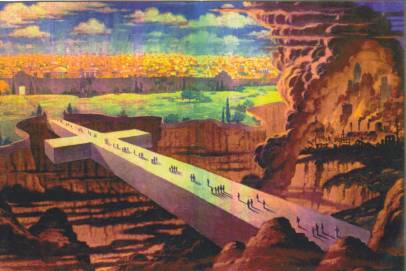
By practicing spiritual disciplines we work out our salvation as God works in us “to will and to work for his good pleasure”(Philippians 2:12-13). By participating in our own jesus-bridge-1transformation, we participate in God’s transformation of the whole world. In other words, the means of grace, made possible by the obedience of Jesus Christ, are a bridge to somewhere. That somewhere is the kingdom of God fully come in the new heaven and earth (Revelation 21-22).

Joy to the world!

No more let sins and sorrows grow, nor thorns infest the ground:
he comes to make his blessings flow
far as the curse is found.

The Nicene Creed

We believe in one God,
the Father, the Almighty,
maker of heaven and earth,
of all that is, seen and unseen.

We believe in one Lord, Jesus Christ,
the only Son of God,
eternally begotten of the Father,
God from God, Light from Light,
true God from true God,
begotten, not made,
of one Being with the Father;
through him all things were made.
For us and for our salvation
he came down from heaven,
was incarnate of the Holy Spirit and the Virgin Mary
and became truly human.
For our sake he was crucified under Pontius Pilate;
he suffered death and was buried.
On the third day he rose again
in accordance with the Scriptures;
he ascended into heaven
and is seated at the right hand of the Father.
He will come again in glory
to judge the living and the dead,
and his kingdom will have no end.

We believe in the Holy Spirit, the Lord, the giver of life,
who proceeds from the Father and the Son,
who with the Father and the Son
is worshiped and glorified,
who has spoken through the prophets.
We believe in one holy catholic* and apostolic church.
We acknowledge one baptism
for the forgiveness of sins.
We look for the resurrection of the dead,
and the life of the world to come. Amen.
*universal
The United Methodist Hymnal # 880.


Man Cannot Live by Chick-Fil-A Alone; Support the Salvation Army

Chick-Fil-A has hit the headlines hard. For one reason because of left-wing protests and demonstrations outside of some of its newer locations, like one in Toronto. Left-wing activists have excoriated Chick-Fil-A for its support of traditional Christian values on marriage and family. They have also decried its charitable contributions to organizations like the Salvation Army, which also upholds traditional values on sex and marriage. In the face of such protests, conservative Christians have rallied to support Chick-Fil-A. Many would say it’s that support that has helped it become one of the most prosperous fast-food chains in the country, despite not opening on Sundays. Yet a couple of weeks ago Chick-Fil-A was in the headlines for different reasons.chickfila meal

After an interview with Chick-Fil-A executives, Bisnow published an article entitled “EXCLUSIVE: Chick-fil-A To Stop Donations to Charities with Anti-LGBT Views.”  In the article the COO, Tim Tassopoulos, is quoted as saying: “There’s no question we know that, as we go into new markets, we need to be clear about who we are,” and “There are lots of articles and newscasts about Chick-fil-A, and we thought we needed to be clear about our message.”

The journalist, Cameron Sperance, went on to explain that “the new initiative will no longer include donating to organizations like the Salvation Army, the Fellowship of Christian Athletes and the Paul Anderson Youth Home, Chick-fil-A says, all of which sparked criticism in the past from the LGBTQ community due to the organizations’ stances on homosexuality.” Sperance also said, “Future partners could include faith-based and non-faith-based charities, but the company said none of the organizations have anti-LGBT positions” (emphasis mine).

This November 18th article came on the heels of news that a halftime show singer for the Thanksgiving Day game between the Cowboys and Bills, Ellie Goudling, threatened to cancel her performance because the Cowboys work with the Salvation Army to help the homeless. The Salvation Army is not just a charitable organization, it is a Christian denomination in the Wesleyan tradition, founded by William and Catherine Booth. Because they have an official position that sex is for marriage and marriage should only be between one man and one woman—the same official position of the United Methodist Church and many other Christian denominations around the country and the world— leftists have labeled them a hate group. This is in spite of the fact that they are one of the largest and most effective providers of poverty relief for people from all walks of life. Just today a Salvation Army bell ringer told me how thankful for how much the Salvation Army had done for him despite his sinful past and criminal background. They help anyone who needs it. But for some left-wing activists identity politics comes before helping people in need.Salvation Army Bell Ringer

In response to Chick-Fil-A’s decision not to renew their support for them, the Salvation Army made the following statements:

“We’re saddened to learn that a corporate partner has felt it necessary to divert funding to other hunger, education and homelessness organizations — areas in which The Salvation Army, as the largest social services provider in the world, is already fully committed,” and “We serve more than 23 million individuals a year, including those in the LGBTQ+ community. In fact, we believe we are the largest provider of poverty relief to the LGBTQ+ population.”

“When misinformation is perpetuated without fact, our ability to serve those in need, regardless of sexual orientation, gender identity, religion or any other factor, is at risk,” The Salvation Army continued. “We urge the public to seek the truth before rushing to ill-informed judgment and greatly appreciate those partners and donors who ensure that anyone who needs our help feels safe and comfortable to come through our doors.” https://www.dailywire.com/news/salvation-army-releases-statement-on-chick-fil-a-cutting-ties-chick-fil-a-issues-new-statement

The news that Chick-Fil-A would no longer donate to organizations with traditional views on sexual morality and marriage sparked concern and outrage in conservative circles. Many conservatives felts betrayed. Some asked Chick-Fil-A to clarify their position. The Bisow article said Chick-Fil-A would continue to give to faith-based organizations, but not to one’s with “Anti-LGBTQ” views. In response to inquiries from The Christian Post, Chick-Fil-A representatives insisited they had not capitulated to political pressure and that they would continue to give to Christian organizations. That same article in The Christian Post, however, reminds us that the COO, Tim Tassopoulos, had told Bisnow

“There’s no question we know that, as we go into new markets, we need to be clear about who we are,” and

“There are lots of articles and newscasts about Chick-fil-A, and we thought we needed to be clear about our message.” and

“When there is a tension, we want to make sure we’re being clear. We think this is going to be helpful.”

Tassopoulos says Chick-Fil-A wants to be clear regarding the negative press they have received. Well Bisnow and many other media outlets came to the clear conclusion that Chick-Fil-A will no longer be giving to organizations like the Salvation Army that have supposedly “anti-LGBTQ” views (i.e. traditional Chrisitin views on sex and marriage). In light of the denials that that is actually the case, conservatives asked for further clarification from Chick-Fil-A. Franklin Graham called the CEO, Dan Cathy, personally. Mr. Cathy assured Rev. Graham that they had not changed their values. Some were satisfied, many were not. If they were really trying to be clear it didn’t work.

Some conservative Christians were offended that other conservatives would question Chick-Fil-A’s loyalty, much less condemn their decision. They said since it has long been a supporter of traditional Christian values that everyone should just give them the benefit of the doubt. Some suggested that it was un-Christian, even Pharisaical to raise such concerns about Chick-Fil-A. Apparently, some think it’s divisive to question and express concerns about Chick-Fil-A’s decision, but fine to depict those expressing those concerns as a pitchfork wielding mob of Pharisees.

If I had heard conflicting reports about the decisions of a friend, I would ask that friend for clarification, privately of course. But Chick-Fil-A is a corporation that made very public statements ostensibly to clarify its values. When the headline from an exclusive interview says what it said, I can understand the concern and the calls for further clarification, especially in light of the denials.

Specifically, if Chick-Fil-A wants to be clear about its values, it would be nice to know: Did the Bisnow article misrepresent their new initiative and the rationale for it? Chick-Fil-A said they will still support faith-based and non-faith-based organizations period. But the Bisnow article said that “the company said” none of the organizations have “anti-LGBTQ” views. Does this mean Chick-Fil-A will no longer support organizations like the Salvation Army because of their views regarding sexual morality and marriage? Or does Chick-Fil-A reject the idea that groups like the Salvation Army actually have “anti-LGBTQ” views? If so, why stop supporting them?

I think those are fair questions given the circumstances.

Grayson Gilbert reported that Chick-Fil-A’s recent decisions were at least a few years in the making. He says Dan Cathy admitted it was a mistake to oppose same-sex marriage in 2014. And it does seem that the way Chick-Fil-A wants to clarify its values in terms of its giving is in response to the criticism it has received based in the perception of its support for traditional values. I have to admit, I have my doubts that its representatives will make a clear and unequivocal statement in support of traditional Christian beliefs regarding marriage. At least I hope they would affirm the right of organizations like the Salvation Army to hold and express traditional views without harassment and threat of government coercion. Nonetheless, the Salvation Army will still receive my support and I hope yours as well. People like the young man I talked to today need help from the Salvation Army, and few do it better.

Regardless of where Chick-Fil-A really stands, make no mistake about what we are dealing with. The reason there is a controversy in the first place is because a powerful segment of the population in the Western world refuses to tolerate even the existence of organizations with traditional values on marriage in its precincts. Boston, Buffalo, and San Antonio all blocked Chick-Fil-A from opening new restaurants. A new Chick-Fil-A in Toronto was blockaded by protestors and a new London location had to shut down amid protests after only eights days. All of this because of their perceived support for traditional values. A perception that it seems Chick-Fil-A wants to change.

Leftists demand total capitulation and the full acceptance of their values, anything less will not be tolerated. This includes organizations like the Salvation Army and any other that refuses to abandon their traditional Christian beliefs regarding sex and marriage.

CBS has a new show called “Evil.” It’s about a team employed by a Catholic diocese to invesigate puported cases of demonic possession and other supernatural phenomena. In one of the early episodes the skeptic, former Catholic, agnostic psychologist asked her priest in training team member, why he would want to be a priest in the Catholic Church given its treatment of the LGBTQ community (strange that her concern was not about the child sex abuse scandals). The priest in training responded by saying the church is flawed, but needs “good” people to correct it. After watching several episodes, for several reasons, including what clearly seems to be a mixed portrayal of occult practices and a positive portrayal of a “throuple” (bisexual/polyamorous relationship), I’ve gotten the impression that the show’s producers are more interested in blurring the lines between good and evil than exposing the devices of the latter. A few weeks before the episode that clearly seemed to put a positive spin on polyamory, CBS published a glowing article about the same, including open marriages, that expressed disapproval of anyone’s disapproval of such relationships.

Make no mistake, the message to the Church is loud and clear, it must change to affirm and celebrate sexual behavior that it has traditionally deemed sinful. The pressure that organizations like Chick-Fil-A and the Salvation Army (which is a denominaitonal church) have faced will not stop at the front doors of other traditional churches. As a matter of fact, infiltrators slipped through the back door long ago anyway. We have already seen that many denominations have already capitulated to the pressure, much of which has come from within. If Chick-Fil-A in fact did capitulate, at least they clung to traditional values far longer than almost all mainline denominations before leftists activists started telling them to “cluck off!” (This literally was the message on picket signs in front of the new Toronto location). The radical sexual revolutionaries will accept nothing but total surrender. Mutual tolerance will not be tolerated, even though the sexual revolutionaries ascended to cultural power under that banner.

For a longtime our culture and much of the church in America has fed the flesh; now we are dealing with the beast. It resembles the beast described in Revelation, chapter 13. This is the leader of the world empire empowered by Satan that wages war against the saints and won’t allow anyone to buy or sell without his stamp approval, which requires total allegiance to his dark agenda. God’s people, however, are called to endurance (13:10), which means not to compromise with the idolatry and sexual immorality of the world empire over which the beast reigns (see messages to the churches in Rev 2, 3, and 17). The world empire is described as a great prostitute that makes the world drunk with sexual immorality.

Then one of the seven angels who had the seven bowls came and said to me, “Come, I will show you the judgment of the great prostitute who is seated on many waters, with whom the kings of the earth have committed sexual immorality, and with the wine of whose sexual immorality the dwellers on earth have become drunk.” ~ Rev 17:1-2 ESV

Churches and individual Christians in the first century were called to be faithful to the end, to not capitulate to a hostile culture, if it cost them their livelihoods, or even if it cost them their lives.

Do not fear what you are about to suffer. Behold, the devil is about to throw some of you into prison, that you may be tested, and for ten days you will have tribulation. Be faithful unto death, and I will give you the crown of life. ~ Rev 2:10

Perhaps Chick-Fil-A compromised to sell more chicken sandwiches and waffle fries and gain cultural respectability; I hope not, but maybe they did. Whatever the case, when faced with temptation, every follower of Jesus needs to remember that man cannot live on bread alone. Jesus reminds us of this when he faced the temptation of the devil, “It is written, “‘Man shall not live by bread alone, but by every word that comes from the mouth of God'” (Matt 4:4). Christians cannot live by Chick-Fil-A alone either.

Do not love the world or the things in the world. If anyone loves the world, the love of the Father is not in him. For all that is in the world—the desires of the flesh and the desires of the eyes and pride of life—is not from the Father but is from the world. And the world is passing away along with its desires, but whoever does the will of God abides forever. 1 John 2:15-17


Finding God When All is Lost

The mother of a mischievous boy sent him to talk to their pastor, hoping the young fella would see the error of his ways. The pastor asked the little man, “Where is God? The boy clamed up and didn’t say a word. Again the pastor asked more emphatically, “Where is God?!” The boy slid to the edge of his chair as he tightly clinched its edge, but still didn’t say a word. Again the pastor asked, “Where is God, young man?!!” This time the boy bolted for the door, ran straight home, and exclaimed to his mother, “Momma, Momma! They’ve lost God down at the church, and they think I’ve got something to do with it!!”

It’s true. Sometimes the people of God do in fact lose God, even if he’s as close as the nose on our face. Israel and Judah had lost God in the blinding mist of idolatry. 2 Kings 21, tells us that King Manasseh, son of Hezekiah, had led Judah into idolatry and wickedness that was even worse than that of the Canaanites (See God’s warning in Lev 18; Dt 8). He even flooded the temple itself with idols and wickedness. Prophets of God warned them, but they refused to listen. In the days of the following king, Josiah, they found the book of the law that had been lost in the temple, underneath all the idols I suppose (2 Kings 22). When Josiah and the people read the book of the law, they realized that they had not only lost the word of God, they had also lost the God of the word. What they discovered when they found God, is it was actually they themselves, who had been lost all along.

Josiah and the people repented and they experienced revival, but it was short-lived. After Josiah died, the succeeding kings led the people back into sin until eventually all was lost. The 17 month Babylonian siege led to hell on earth in Jerusalem, and this was just the prelude to the destruction of the city and the temple, which was burned to the ground. The people of Judah were expelled from the land; they were in exile. All that God had blessed them with was lost. Lamentations is a short poetic book of the Bible that captures the pain and horror of this devastating loss.

In the midst of describing the excruciating experience and feelings of hopelessness, Lamentations 3:21-25 says this:

But this I call to mind, and therefore I have hope: The steadfast love of the Lord never ceases; his mercies never come to an end; they are new every morning; great is your faithfulness. “The Lord is my portion,” says my soul, “therefore I will hope in him.” The Lord is good to those who wait for him, to the soul who seeks him. (ESV)

Sometimes it takes losing everything to find the only thing that really matters; the only thing that really matters is the one and only Someone, who deserves our all.

Sometimes we have to hit rock bottom to truly begin building our lives on the Rock of Ages. Everything else is sinking sand.

Sometimes it’s the hard things that awaken us to the truly good things that ultimately matter. When you’re up the creek without a paddle or a boat or a life jacket, up to your neck with all the forces of death and hell dragging you down, is when you just might begin to look for the Lifeguard who sent his only Son as a life raft.

Jesus reaching into the water

Israel, including the northern kingdom headquartered in Samaria and the southern kingdom of Judah headquartered in Jerusalem, found themselves in just such a place. Samaria had been decimated by Assyria; Jerusalem by Babylon. When all was lost, some of them realized that all they had left were the promises of a faithful, forgiving, and merciful God. Sometimes it takes losing all else before people will really begin to look for God. But there is a limited window of opportunity to actually find God.

Seek the Lord while he may be found; call upon him while he is near; let the wicked forsake his way, and the unrighteous man his thoughts; let him return to the Lord, that he may have compassion on him,
and to our God, for he will abundantly pardon. ~ Isaiah 55:6-7

And you can’t find the Lord if you aren’t really serious about seeking him.

You will seek me and find me, when you seek me with all your heart. I will be found by you, declares the Lord, and I will restore your fortunes and gather you from all the nations and all the places where I have driven you, declares the Lord, and I will bring you back to the place from which I sent you into exile. ~ Jeremiah 29:13-14

In order to find God, we need to know what day it is. Today is the only day we really have, and every today is the day of salvation, the time to seek the Lord. Thankfully his mercies are new every morning! But those todays won’t come forever; eventually the window of opportunity will close.

In order to find God, we also need to know where we are. Where are we? We are always on the brink of the eternal judgment of God. We are always on the brink of losing everything we have in this world. The question is will we find God in time to find ourselves standing on the promises of God when all else is lost, for “the grass withers, the flower fades, but the word of our God will stand forever” (Is 40:8).

Our culture has lost God. In many school districts this Thanksgiving, kids will learn about the pilgrims without ever hearing about the One they followed. They will read about how they gave thanks without hearing of the One to whom they gave thanks. God is not only lost to our culture, in many ways he has been intentionally hidden by outright rejection or by distorting his true identity. The same is true for much of the church that has been conformed to the world. The nation and the compromised church is on the brink. Like Israel and Judah they have been convinced by false prophets and priests that “it can’t happen to us” (Lam 4:12-13). In the face of warnings and lesser judgment before exile, Israel in pride declared they would rebuild even better and stronger than before without God (Is 9:8ff); the lying prophets of Jerusalem filled the people with vain hopes that disaster would never come as they encouraged the wicked (Jer 23:17). They were disastrously wrong and eventually they lost everything, which gave them the opportunity to begin seeking the only blessing that lasts forever.

One day we’ll all discover that there is only one thing that will give us ultimate security, and that is faith in the Lord and God, whose steadfast love and faithfulness endures forever. We may have the promise of social security, but what we really need is the eternal security that only God can provide. You can be buried in your RV, but without God eternity will be anything but a picnic. The truth is we brought nothing with us into this world, and we will not be able to take anything with us when we leave it (1 Tim 6:7). Eventually everyone will lose everything, but only some will find the only thing that lasts forever with blessing, a true, loving relationship with God through Jesus Christ.

As for the rich in this present age, charge them not to be haughty, nor to set their hopes on the uncertainty of riches, but on God, who richly provides us with everything to enjoy. They are to do good, to be rich in good works, to be generous and ready to share, thus storing up treasure for themselves as a good foundation for the future, so that they may take hold of that which is truly life. ~ 1 Tim 6:17-19

Sometimes it takes losing everything to find the one thing that really matters eternally. If we will seek God with all our heart, we will discover that it wasn’t really God who was lost after all. If we will seek him, we will find him to be faithful and forgiving, gracious and merciful, abounding forever with steadfast love.

Since we have the same spirit of faith according to what has been written, “I believed, and so I spoke,” we also believe, and so we also speak, knowing that he who raised the Lord Jesus will raise us also with Jesus and bring us with you into his presence. For it is all for your sake, so that as grace extends to more and more people it may increase thanksgiving, to the glory of God.

So we do not lose heart. Though our outer self is wasting away, our inner self is being renewed day by day. For this light momentary affliction is preparing for us an eternal weight of glory beyond all comparison, as we look not to the things that are seen but to the things that are unseen. For the things that are seen are transient, but the things that are unseen are eternal. ~ 2 Corinthians 4:13-18

Why It’s Hard Being a Preacher Today; Why God is More than Enough

It’s not easy to be a preacher in the United Methodist Church these days. Not that it ever was easy, but right now it’s as hard as it’s ever been. The fault line that has been there from the beginning of the denomination in 1968 has erupted. Fall out is every where, and it seems it will get worse before it gets better.

It not easy to be a preacher in the UMC for anyone. The fault line runs right through every single local church in the U.S. The majority of our pastors are progressive (the majority of Bishops even more so); the majority of our laity in the pews are traditionalists. But those majorities are not overwhelming and they are mixed. The day of judgment is upon us in more ways than one.

Undoubtedly our denomination is under the judgment of God. At best, overall we have been lukewarm; at worst we have been in flat out rebellion against God’s word. And if Scripture is true, God is displeased either way.

I know your works: you are neither cold nor hot. Would that you were either cold or hot! So, because you are lukewarm, and neither hot nor cold, I will spit you out of my mouth. For you say, I am rich, I have prospered, and I need nothing, not realizing that you are wretched, pitiable, poor, blind, and naked. I counsel you to buy from me gold refined by fire, so that you may be rich, and white garments so that you may clothe yourself and the shame of your nakedness may not be seen, and salve to anoint your eyes, so that you may see. Those whom I love, I reprove and discipline, so be zealous and repent. Behold, I stand at the door and knock. If anyone hears my voice and opens the door, I will come in to him and eat with him, and he with me. The one who conquers, I will grant him to sit with me on my throne, as I also conquered and sat down with my Father on his throne. He who has an ear, let him hear what the Spirit says to the churches. ~ Rev 3:15-22 ESV

In many ways things are as bad as they were in Jerusalem during the ministry of Jeremiah.

“But in the prophets of Jerusalem
I have seen a horrible thing:
they commit adultery and walk in lies;
they strengthen the hands of evildoers,
so that no one turns from his evil;
all of them have become like Sodom to me,
and its inhabitants like Gomorrah.”

Therefore thus says the Lord of hosts concerning the prophets:
“Behold, I will feed them with bitter food
and give them poisoned water to drink,
for from the prophets of Jerusalem
ungodliness has gone out into all the land.”

Thus says the Lord of hosts: “Do not listen to the words of the prophets who prophesy to you, filling you with vain hopes. They speak visions of their own minds, not from the mouth of the Lord. They say continually to those who despise the word of the Lord, ‘It shall be well with you’; and to everyone who stubbornly follows his own heart, they say, ‘No disaster shall come upon you.’” ~ Jeremiah 23:14-17

Still, many of our leaders will refuse to acknowledge the pattern. Like the leaders of Judah, they will bury their heads in the sand, refuse to call the denomination to real repentance, encourage the rebellious, and condemn the righteous like they did with Jeremiah.

It’s not easy to be a preacher in the UMC right now. For fear of losing significant numbers of people over the years, many have opted to ride the fence. In trying to sustain a certain number of people in the pews, many have failed to provide the sheep a diet substantive and steady enough to sustain a healthy faith. A focus on numerical growth at the expense of spiritual growth has left churches weak and malnourished, vulnerable to wolves, including those in sheep’s clothing. Indifference to doctrine in the name of a pseudo unity has brought us nothing but division and strife, and left the people in the pews to be blown about and tossed to and fro by every wind of false doctrine and deceitful scheming (Eph 4:14). As a result we have lost in both quantity and quality.

The current environment is hard on everyone. The tangled web of conflict and strife has pulpits pitted against the pews, bishops and district superintendents pitted against certain pastors and churches, boards and agencies and seminaries pitted against local churches, pastor against pastor, bishop against bishop, etc., etc., etc. . . . In many cases pastors on the very same staff are actively working against one another, and bishops and district superintendents are actively working against pastors that they have appointed. Progressive students at Duke Divinity School apparently see neutrality as rejection. Nothing less than full acceptance of the full LGBTQIA+ spectrum and agenda will do.

Yet we still hear the repeated assertions of those who insist we can all just get along, even while they insist that traditional views are doing great harm by promoting at least injustice and oppression, and probably even evil. For good reason these types of assurances ring hollow. At best they are incredibly naïve; likely they are disingenuous.

Some churches have pastors who are angered by other pastors on staff referring to the congregation as “sisters and brothers” because it is not “inclusive” enough. For some progressives the only possible explanation that someone can’t clearly see that there are dozens and dozens, maybe even an infinite number of possible genders and pronouns to go with them, is that they are backward bigots. In other churches there are progressive senior pastors who honestly feel like they have to protect the congregation from an associate who has traditional views. There are also lay leadership teams in churches that have felt like they had to protect the church from the views of progressives pastors that deny the warning of eternal judgment in hell or that the Bible is in its entirety really the uniquely inspired word of God, or that deny Jesus as the incarnate Son of the one true God, Yahweh, is the only way to the Father. As a matter of fact, progressives are unhappy about masculine nouns and pronouns for God, like Father and he, and seek to ban their use. Moreover, boards of ordained ministry are under fire because they uphold the standards for ordained ministry or because they refuse to. And annual Conferences and jurisdictional conferences are vowing to defy the General Conference.

Churches have been losing people on all sides of the issues that divide us for decades. That has only accelerate since the 2019 General Conference. These are definitely difficult days to be a pastor in the UMC.

Within the past week I learned that a local pastor in North Georgia has been removed from his church by the bishop and cabinet. Apparently his crime was allowing a WCA event to be held at his local church and working in agreement with his congregation to take advantage of a newly added disaffiliation plan in the Book of Discipline. Although there has been some question about whether the disaffiliation plan is valid, it seems that the disaffiliation plan was upheld by the judicial council. At any rate, it seems for supporting the WCA, which has called for faithfulness to our doctrinal standards and discipline and/or amicable separation, and for working with his church in what at least appears at this time to be a legitimate disaffiliation plan, this local pastor was summarily removed from his church. The reality is that his bishop would probably do back flips to avoid punishing any progressive pastor who would lead their church in open defiance of the General Conference.

It’s really is hard to be a pastor in the UMC right now. It’s hard for people on all sides. It is also painful to the point of deleteriously affecting the health and well-being of our pastors. Some pastors feel like John Eubanks in Jerry Clower’s story of “The Coon Hunt.” Feeling like they are trapped in a tree with a wildcat, some pastors may feel like it’d just be better for somebody to shoot up in the tree amongst ’em because somebody’s just got to have some relief!

In addition to the normal and inevitable stresses of being a pastor, we also have the added stress of possibly being at odds with leaders, who have a lot of power over us, and with a significant number of people in our congregations. In some cases it may only be a significant minority; in others it may be a significant majority; in others it may be split right down the middle. And this is not to mention the increasing pressure from the secular culture on churches and other organizations that espouse traditional Christian views. It is a pressure that many churchgoers and church leaders succumb to and personally bring to bear in their own local churches. In any scenario the fault line has erupted. People must find at least temporary relief on one side or the other; the fence has vanished in the chasm.

The progressive Baptist theologian, David Gushee, said a couple of years ago:

I now believe that incommensurable differences in understanding the very meaning of the Gospel of Jesus Christ, the interpretation of the Bible, and the sources and methods of moral discernment, separate many of us from our former brethren — and that it is best to name these differences clearly and without acrimony, on the way out the door. I also believe that attempting to keep the dialogue going is mainly fruitless. The differences are unbridgeable. https://www.theaquilareport.com/david-gushee-differences-unbridgeable/

Gushee was right. He was also right to say that the only possibility that remains is that one side might convert to the other, as he himself did. The fissure has become a great chasm. Trying to hold both sides hostage in the same church will only bring more chaos, confusion, and calamity. It’s downright painful to be a pastor in the UMC right now, but not hopeless.

God called the prophet Jeremiah to preach to a wayward Jerusalem that had become like Sodom and Gomorrah (Jer 23:14). It was a painful time for Jeremiah. He’s not called the “weeping prophet” for no reason! When God called him, he told him the people would fight against him (Jer 1:19). As a matter of fact, throughout his entire ministry, it seems Jeremiah only won two converts (i.e. Baruch and Ebed-melech). For his preaching, Jeremiah was sorely mocked and severely persecuted. At times he was so weary he wished he had never been born. At times he felt like giving up altogether on preaching the truth; but the fire of God’s word burned too powerfully within his soul! (Jer 20:7-18). Undoubtedly, the vision of hope of better days to come (3:15-18; 23:5-6; 29:10-14; 31:31-40; etc.) sustained him.

Jeremiah by Michelangelo
The Prophet Jeremiah by Michelangelo – Sistine Chapel

It’s hard to be a pastor in the UMC right now. It is painful, but others have experienced far worse. Although God told Jeremiah that the leaders of Jerusalem and the people would fight against him, God also promised him that they would not prevail, because God said, “for I am with you” (1:19). No matter how many may be against us, God being with us is always more than enough. We have to believe that, and hold on to the promise that better days are sure to come.

Original Sin, East to West: What’s the Difference?

Wherever I see posts or articles defending the Methodist doctrine of original sin—whether they be my posts or someone else’s—it seems inevitable that some United Methodists will refer to the Eastern Orthodox Church’s supposed rejection of the doctrine to justify their own. Regardless of whether it is entirely accurate to say that the Eastern Orthodox Church rejects the doctrine of original sin, it is an essential Methodist doctrine. Article VII in The Articles of Religion of the Methodist Church affirms the doctrine of original sin. Moreover, it is without question that John Wesley saw it as a fundamental and essential doctrine without which it is impossible to make sense of the other essential Methodist doctrines of justification by faith, the new birth, and sanctification. But is it entirely accurate to say that the Eastern Orthodox Church does not have a doctrine of original sin? Compass

It is true that the Eastern Orthodox Church rejects the idea that descendants of Adam and Eve bear the guilt of their sin, but they also affirm that all of Adam and Eve’s descendants, as well as the entire cosmos, suffer from the consequences of their sin. Eastern Orthodoxy teaches that all of humanity suffers from the negative consequences of what they prefer to call “ancestral sin” (the fall in Eden), the first and foremost consequence being death. Other consequences in humanity include corrupted desires that result in the darkening and distortion of the image of God in all of humanity. While they believe only Adam and Eve bear the guilt of their sin, they do affirm that all of humanity suffers the deadly consequences of the resulting corruption, as poison in a spring corrupts an entire stream.

Therefore, when it comes to infants they believe they are born innocent without any “inherited guilt.” But, according to the Orthodox view, infants are born with a fallen nature with corrupted desires and are subject to death and the influence of demons. Consequently their practice of infant baptism involves application of grace for healing and deliverance, even if not for forgiveness. In their view forgiveness is only for those who have cognizantly committed actual sin themselves. Whereas Augustine taught that unbaptized infants that die would go to the punishment of hell, the Eastern Church does not believe that because they do not believe infants bear inherited guilt. It is worth noting that Thomas Aquinas in the West also rejected the view that unbaptized infants that die would go to eternal punishment. Rather, according to Thomas, they would go to a comforting and perfectly pleasant realm that he called “The Limbo of the Infants.” The difference, nonetheless, between the Eastern and Western Church is actually more about “inherited guilt,” not about the corruption of nature.

But the Eastern Church has also maintained an emphasis on free will, whereas the Western Church, under the influence of Augustine, has tended to emphasize the bondage of the will. This is not to say that the Eastern Church is Pelagian. They do not believe the will unaided by divine grace is capable of good. They do accept the decision of the Council of Carthage (418) on sin and grace and its rejection of Pelagianism. The Eastern Church also rejects the notion of double predestination, a conclusion that some would later draw from Augustine that Augustine himself apparently did not draw. Double predestination, the notion that God determined who would be saved and who would be damned before the foundation of the world, was rejected in the West at the Second Council of Orange (529). Along with many Christians in the West, including Wesleyans, the East views the predestination of the elect to be based on God’s foreknowledge of those who will believe. But, again, with regards to original sin the major difference between East and West has to do with inherited guilt (See Orthodox view of Council of Carthage and sin and grace).

For John Wesley, on the other hand, the punishment of ancestral corruption and death implies inherited guilt. Those who suffer the consequences must somehow be culpable. Wesley came to the conclusion that in some sense all humans were in Adam (Rom 5:12), although for the most part he was content to leave the how to mystery. The position he eventually adopted, nonetheless, is called traducianism (See Holy Love and the Shape of Grace by Collins pgs.67-68). This is the idea that body and soul are passed down from Adam and Eve, which stands in contrast with the view that upon conception each soul is created directly by God. In this case each soul was in a sense involved in the fall of Adam, thus bearing the guilt. That inherited guilt, however, in Wesley’s view was covered by prevenient grace through the merits of Christ’s death so that no one would be condemned for Adam’s actual sin. Therefore, Wesley believed unbaptized infants that die are not condemned for inherited guilt, not because they do not possess it, but because it is preemptively covered by the blood of Christ (See The Scripture Way of Salvation by Collins p. 47).

In terms of the bondage of the will, nonetheless, Wesley’s view was thoroughly Augustinian. For Wesley, apart from prevenient grace every soul is utterly helpless to receive God’s free grace. But according to Wesley, by the prevenient grace of God every soul is capable of actively rejecting or passively receiving God’s saving grace by faith. Again, the need for God’s saving grace is predicated upon the reality of original sin, the emphasis of which is on the corruption of human nature in the fall any way.

 Article VII – Of Original or Birth Sin
Original sin standeth not in the following of Adam (as the Pelagians do vainly talk), but it is the corruption of the nature of every man, that naturally is engendered of the offspring of Adam, whereby man is very far gone from original righteousness, and of his own nature inclined to evil, and that continually.

Alister McGrath says for all the historical differences between Catholics and Protestants with regards to justification, both shared the same assumption “that humanity was alienated from God, and required reconciliation to God to achieve its true potential.” The secular culture inspired by the Enlightenment, however, would increasingly challenge that assumption with the view “that humanity did not require reconciliation to anything or anyone, for any reason” (See Iusttitia Dei by McGrath 4.6 3rd ed.). Similarly, the Eastern Church and the Western Church share the same basic assumption about humanity’s alienation from God and its need for reconciliation. As I shared in my last article, at a conference sponsored by Duke Divinity School and the Duke Endowment, a United Methodist Elder and professor not only denied the doctrine of original sin, she also denied that Adam and Even actually sinned at all. The difference between some progressive Methodists and traditional Methodists is not like the difference between Eastern Orthodoxy and the Catholic and Protestant West; it’s more like the difference between liberal Enlightenment theologies that tended to reject the doctrine of original sin altogether as superstition and Christian doctrines about sin and grace of both East and West. In some cases it seems the progressive view has more in common with the Enlightenment secularism described by McGrath. Remember for Wesley rejecting the doctrine of original sin amounts to remaining in paganism. He said this in response to the increasing prevalence of liberal Enlightenment theologies in the Church of England toward the latter third of his ministry.

Traditionally the Eastern Church and the Western Church have both taught that human nature has been corrupted by the fall and both have taught the need for divine grace to be healed and/or forgiven. When it comes to the nature of sin and the sin nature, the East is not as far from the West as some misleadingly suggest. The really good news is that the Church in both the East and the West believe the grace of God in Christ by the power of the Holy Spirit can cast all our sins as far as the east is from the west. From the perspective of the psalmist, that is definitely a long ways apart. Praise the Lord!

Psalm 103 (ESV)
Bless the Lord, O my soul,
and all that is within me,
bless his holy name!

Bless the Lord, O my soul,
and forget not all his benefits,
who forgives all your iniquity,
who heals all your diseases,
who redeems your life from the pit,
who crowns you with steadfast love and mercy,
who satisfies you with good
so that your youth is renewed like the eagle’s.

The Lord works righteousness
and justice for all who are oppressed.
He made known his ways to Moses,
his acts to the people of Israel.

The Lord is merciful and gracious,
slow to anger and abounding in steadfast love.
He will not always chide,
nor will he keep his anger forever.

He does not deal with us according to our sins,
nor repay us according to our iniquities.
For as high as the heavens are above the earth,
so great is his steadfast love toward those who fear him;
as far as the east is from the west,
so far does he remove our transgressions from us.
As a father shows compassion to his children,
so the Lord shows compassion to those who fear him.
For he knows our frame;
he remembers that we are dust.

As for man, his days are like grass;
he flourishes like a flower of the field;
for the wind passes over it, and it is gone,
and its place knows it no more.

But the steadfast love of the Lord is from everlasting to everlasting on those who fear him,and his righteousness to children’s children,
to those who keep his covenant
and remember to do his commandments.

The Lord has established his throne in the heavens,
and his kingdom rules over all.
Bless the Lord, O you his angels,
you mighty ones who do his word,
obeying the voice of his word!
Bless the Lord, all his hosts,
his ministers, who do his will!
Bless the Lord, all his works,
in all places of his dominion.
Bless the Lord, O my soul!

Worse than Pelagians? Why We Need A Savior

Throughout the history of the church, there have been many times and many people who have disparaged and denied the doctrine of original sin. Most famously an ascetic British monk called Pelagius insisted, in a nutshell, that human descendants of Adam do not share in the guilt of Adam’s sin, nor was humanity left morally debilitated through any corruption of its nature. According to Pelagius humans were only negatively affected by the bad example of Adam. With the better example of Jesus and proper instruction in the law of God, Pelagius believed that humans after the fall of Adam are capable of living morally upright lives apart from any special grace from God.

We know of Pelagius’ teachings through the writings of St. Augustine, who challenged him, and by way of Pelagius’ commentary on St. Paul. In countering Pelagius and his followers, Augustine insisted that the fall of Adam had indeed corrupted the nature of all of humanity rendering every individual completely dependent upon the mercy and grace of God to be redeemed. Augustine spent much time exegeting and expounding on Romans 5, among many other passages of scripture, in countering the teachings of Pelagius. Augustine defended and elaborated on the doctrine of original sin, which makes the grace of justification and regeneration necessary.

Augustine-and-Pelagius
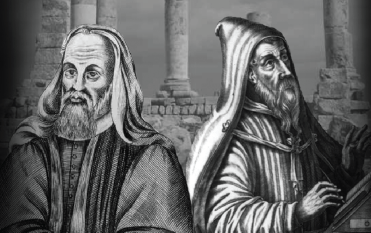
Pelagius and St. Augustine

There are some who act as if Augustine just made up the doctrine of original sin whole cloth. Pelagianism, the idea that human nature is still basically good and unaffected by original sin, continues to be a challenge for the Church. I was amazed to see that during the last United Methodist General Conference, one seminary professor explicitly stated on social media that he hoped the Pelagian United Methodists (i.e. progressives) would win out over the Augustinians (conservatives). Others have denounced the doctrine of original sin as harmful. Danielle Shroyer says, “As a pastor and now a writer, I want to help people grow into a mature relationship with God. I just don’t think original sin is helpful in doing that; in fact I think it’s very often harmful.”

I do think it is important to understand, as Augustine would agree, that humans were created good in the image of God. When Augustine said humans were sinners by nature he clarified that he meant human nature was corrupted by sin not by God’s design. But human nature corrupted by sin leads to immorality and misery. Throughout history periods of excessive optimism about human goodness have been punctuated by exclamation marks of tremendous human evil. As Proverbs 16:18 says: “Pride goes before destruction,and a haughty spirit before a fall” (ESV). Yet the excessive optimism continues to resurface; the denials of the doctrine of original sin persist.

At a conference last month—a conference sponsored by Duke Divinity school and attended by both bishops in the state of NC with many district superintendents present— another seminary professor gave her spin on the story of Adam and Eve in Genesis 2-3. For one, she insisted that Adam and Eve and the terms translated man and woman (Hebrew: ish and isha) in the latter half of Gen 2:23 don’t just mean male and female, those terms refer to unity in diversity in all of life’s generic variety. It’s not really a story of God’s design for marriage (pay not attention to Gen 2:24-25 or what Jesus said in Matt 19:4-6 and Mark 10:5-9). The professor went on to say, supposedly on the authority of St. Irenaeus, that these two humanoid units of generic diversity were not mature adults; they were immature and innocent children. Therefore, she said the story in Genesis 3 is not a story about original sin; rather it is a story about “original wounding” as Adam and Eve were children who were abused by the serpent. WOW! Adam and Eve were the original victims not perpetrators of sin!

Irenaeus, a second century Church Father, did say that Adam and Eve were created as children and had to mature into adulthood, but in that same context he also clearly acknowledged the sin of Adam and Eve. In comparing the disobedience of Eve and with the obedience of Mary that led to the virgin conception and birth of Jesus the Messiah and Savior, Irenaeus said:

. . . [Eve] having become disobedient, was made the cause of death, both to herself and to the entire human race; so also did Mary, having a man betrothed [to her], and being nevertheless a virgin, by yielding obedience, become the cause of salvation, both to herself and the whole human race.  ~ Against Heresies 3:22:4

Irenaeus also argued against the claim that Adam was not saved by Christ. He said it is absurd to believe that Adam would not have also been saved by Christ along with his descendants who had been begotten by him in the same captivity (Against Heresies 3:23:2). He is talking about the entire human race who was born into the spiritual captivity of the devil. Ephesians 2:1-4, a key text for Augustine in the 5th century, generations after Irenaeus, puts it this way:

And you were dead in the trespasses and sins in which you once walked, following the course of this world, following the prince of the power of the air, the spirit that is now at work in the sons of disobedience—among whom we all once lived in the passions of our flesh, carrying out the desires of the body and the mind, and were by nature children of wrath, like the rest of mankind. Eph 2:1-4

In comparing and contrasting the tree of life in the garden with the new tree of life, the cross of Calvary, and in arguing that Jesus was the Word of the same God the Father who had given the commandment to Adam in the garden, Irenaeus also expressed the complicity of the entire human race in the sin of Adam.

by which things He clearly shows forth God Himself, whom indeed we had offended in the first Adam, when he did not perform His commandment. In the second Adam, however, we are reconciled, being made obedient even unto death. For we were debtors to none other but to Him whose commandment we had transgressed at the beginning. ~ Against Heresies 5:16:3 (emphasis mine)

The professor reads Irenaeus the same way she reads the Bible, selectively and out of context. To buy the assertion that the story in Genesis 2-3 is a story about “original wounding” and not “original sin” (which many have, hook, line, and sinker) you have to ignore so much of what the text actually says. You have to ignore the fact that God gave Adam a commandment with a serious warning of judgment (Gen 2:16-17). Adam and Eve disobeyed the command at the temptation of the serpent (Gen 3:6). As a result of their disobedience they were judged by God as was the serpent, and they were exiled from the garden of Eden to a life of suffering in a world under a curse (Gen 3:14-24). We should also note that this is a pattern that Israel would  fall into also. Israel was adopted into God’s covenant family and given commandments. They were promised blessing in the promised land if they obeyed; they were warned about the cursing that disobedience would bring. Eventually, disobedience led to Israel being exiled from the promised land. Why? Because of sin. Israel along with the rest of the world was still under the power of sin in Adam as Paul argues in Romans (Rom 3:9; Romans 5).

The professor’s spin on Gen 2-3 is far worse than the false teaching of the Pelagians, which the United Methodist Articles of Religion condemn. Article VII says:

Original sin standeth not in the following of Adam (as the Pelagians do vainly talk), but it is the corruption of the nature of every man, that naturally is engendered of the offspring of Adam, whereby man is very far gone from original righteousness, and of his own nature inclined to evil, and that continually.

Although Wesley did speculate that Augustine may have overstated the actual views of Pelagius in the heat of debate, he insisted that to deny the doctrine of original sin is to deny biblical Christianity and to remain in paganism (See Sermon 44 “Original Sin” and Wesley’s treatise “On Original Sin”). Pelagius’ view was apparently more influenced by Stoic philosophy than the Bible. The professor mentioned above seems to be more influenced by what Christian Smith and Melinda Lundquist Denton called moralistic therapeutic deism, as well as postmodern progressive gender ideology. In both cases the Biblical data is forced into pagan paradigms. The interpretation of the professor, who is also a United Methodist elder, is far worse because she not only denies that Adam’s descendants share in the guilt of Adam’s sin and inherit a corrupted human nature as a result; she denies that Adam and Eve themselves were guilty of any sin at all!

Whereas some apparently feel free to read into scripture just about anything they want, Augustine and Wesley both sought to make their case from and under the authority of scripture. Wesley knew that original sin is the reason we need justification and new birth. The doctrines of justification by faith, the new birth, entire sanctification, and glorification in resurrection all assume the doctrine of original sin.

The Bible reveals our great need for help. We need much more than a good example and sound instruction. A central promise of the new covenant reveals just how serious our need is, namely the promise of a new heart. Around the time of Israel’s exile Jeremiah and Ezekiel both pick up on the promise of God in Deut 30:6. The promise is that after the time of Israel’s exile God would circumcise his people’s heart so they would love him with all their heart and soul. Jeremiah calls this the new covenant when God would write his laws on his people’s heart (Jer 31:31ff). Ezekiel describes it like a heart transplant when God would remove the calloused, hardened hearts of his people and give them a new heart and a new spirit of obedient love along with his very own Spirit  (Ezk 35:26-27). As Christians we believe this promise is fulfilled by Jesus the Messiah and received by faith in him. As Isaiah 53:5 puts it, “But he was pierced for our transgressions; he was crushed for our iniquities; upon him was the chastisement that brought us peace, and with his wounds we are healed.”

We need a new heart in Christ because there is something wrong with the one we have in Adam. We need healing because we are sick, sin sick because of a hardened heart and the corrupted desires that go with it. As Jeremiah 17:9 puts it, “The heart is deceitful above all things, and desperately sick; who can understand it?” The human heart is deceitful enough to convince us that we are fine just the way we are. As Jesus implied, no one is as spiritually blind as the one who thinks they can see just fine without his healing touch! (John 9:39-40)

Thankfully by the grace of God in Christ Jesus through faith we have hope “because God’s love has been poured into our hearts through the Holy Spirit who has been given to us” (Rom 5:5).

We need more than a good example and instruction. We need more than a great teacher; we need the Great Physician because we need healing! We need more than forgiveness for following bad examples; we need new birth! We need more than a life coach; we need a savior! Thankfully we have one. His name is Jesus, the Son of God, the risen Lord.

Hail the heav’n-born Prince of Peace,
Hail, the Sun of Righteousness
Light and life to all He brings,
Risen with healing in His Wings.
Now He lays His Glory by,
Born that man no more may die
Born to raise the sons of earth,
Born to give them second birth. . . . .

Charles Wesley “Hark! The Herald Angels Sing”


Give the People what they Want? The Root of Idolatry

The O’Jays sang “You’ve got to give the people what they want.” They meant, truth, justice, and civil rights. All of those are good things that every person deserves no matter who they are or where they come from.

Giving people what they want is generally a good practice in business too. If you have a restaurant, you won’t do very much business with a menu that’s not very appetizing to people. Sometimes you might be surprised though. From what I understand, at a fall festival they have in Mount Airy, NC, one of the most popular items sold is a collard green sandwich. I’ve never had one, but I think it’s made with cornbread, collard greens, and bacon. Bacon can do wonders with just about anything, but I’m not sure what’s really so appetizing about the collard green sandwich. It’s not quite as popular as the pork chop sandwich from Snappy Lunch in downtown Mount Airy, but its apparently really popular during The Autumn Leaves Festival.

At any rate, sometimes you’ve just got to give the people what they want. Exodus 32, however, shows that this is not always wise; sometimes there’s a danger in giving people what they want.

Moses had been up on the mountain for a long time communing with God and receiving instruction for the people. God also provided stone tablets with the Ten Commandments engraved on them, which he had already spoken to the people about. The people had agreed to keep all of God’s commandments and to be faithful to the covenant. But before Moses came back down Mount Sanai with the stone tablets, the people grew impatient. They demanded that Aaron, Moses’ brother, make them gods that they could see and touch. They demanded that he make them an idol that they could bow down to, even though God had commanded them not to. Aaron quickly gave in and gave the people what they wanted! He made them a golden calf, a young bull. But it sounds like he tried to rationalize it by associating it with the LORD. The people were just so ecstatic about their shiny new idol that they made sacrifices to it and had a drunken orgy, which is what 1 Cor 10:6-8 indicates.

God informed Moses about what was happening among the people. He was livid! He was ready to start all over again with Moses, kind of like he did with Noah. But Moses interceded with God for the people. He appealed to God’s character, to the honor of God’s name, and to the promise that God made to Abraham, Isaac, and Israel (Jacob). Although God was righteously indignant, Moses’ prayer reveals that God is merciful, gracious, and forgiving by his very nature.Worshiping_the_golden_calf

Idolatry is a gateway sin. If there is rampant sin among people, you’ll usually be able to trace it back to idolatry. Martin Luther said that faith is first a fulfillment of the first commandment, and obedience to the other commandments flows from there. The reverse may be true as well. When people lose faith in God, they will resort to some form of idolatry that will lead them into further disobedience.

Idolatry emerges from unbelief in God. It is the result of a corruption of the mind, the way we think about God. Stinking thinking leads us to reject the God who created us in his image for gods that we create from our own imagination to suit our own desires. The true God created us in his image to do his will; idolaters create gods in their own image to do their will—to give them what they want. Idolatry is the rejection of the God who is who he is for gods that are what people want them to be. Idols give people the false assurance that they can harness the power of the heavens and bend it to their will.

It is a denial of the reality of God’s nature revealed in God’s word and in the contours of God’s creation. You can detect idolatry that creeps in among God’s people by how they distort the word of God to conform to the idols they worship. Aaron tried to rationalize the idol by calling it the Lord, but this was the same Lord who had clearly prohibited the making of idols. Sometimes what people call the Lord are really only cheap imitations that are actually idols they have conceived to be conformed to their desires and pride.

A mainline theologian at a conference I recently attended apparently does not like the doctrine of original sin. So she spun the story of the fall of Adam and Eve in the garden as being a story of Adam and Eve being victims of child abuse at the hands of the serpent. She said because they were only young children that it’s really a story of “original wounding” not “original sin.” Adam and Eve were wounded victims not sinners. Wounded victims need compassion not judgment.

The problem with that interpretation is that it doesn’t make sense of the biblical story; it makes mincemeat of it. Even in the immediate context, key elements of the story that Genesis 1-3 actually tells have to be ignored altogether. God gave a command to Adam (Gen 2:16-17); Adam and Eve disobeyed that command after being tempted by the serpent, who himself distorted God’s word (Gen 3:1-7); and Adam and Eve were also judged by God, along with serpent, and were exiled from the garden to a life of suffering in a fallen world. This mirrors the pattern of God’s relationship with Israel. Commandments were given. They were promised blessing through obedience and cursing because of disobedience. Because of their disobedience they were exiled from the promised land. To say that Adam and Eve were original victims not original sinners is a massive distortion, really a case of epic eisegesis (reading something into the Bible that is not there).

I suspect the distortion is the result of idolatry. More than likely it is the result of a view of god as a non-judgmental, cosmic therapist of sorts, one who would not punish people because of sin. The story in Genesis 1-3, nonetheless, links suffering with sin and rebellion against God, albeit with the hope of redemption and healing to come through renewed faithfulness.

Any god that would never judge because of sin may be what the people want, but it’s not always wise to give people what they want. Aaron gave people what they wanted and it led to disaster. Even with the forgiveness of God there were negative consequences. False gods always promise what they will ultimately never be able to deliver. Idols lead us away from truth and into falsehood. They lead us to believe we can have things our way, that we can always get what we want. But as the Rolling Stones sang, “You can’t always get what you want!”

Sometimes people will talk about making the Bible and Christianity more relevant. But we have to be careful with that. If by that we mean making it more understandable and plain, that is very right and true. But if we mean we need to make it more entertaining and acceptable to people’s sinful desires so it will be more popular that is a grave mistake. If the Bible is true, the truth about God will ultimately never win a popularity context with this fallen world as its judge. The truth is always relevant, whether people like it or not.

There is a God who created us out of love for a purpose. He sent his Son into this world to die for our sins that we may be forgiven and he raised him from the dead that we my live a new life in him. If Jesus is the only way to overcome the grave and hell, then of course it is relevant. God’s word teaches us that our own healing and renewal in righteousness and holiness will bring salvation, healing, and renewal to other people and to all of creation. If it’s true, of course it is relevant! The question is, do we believe it is true? If we do our Christian faith will be of utmost importance.

But sometimes people get bored with the truth, or even angry with the truth; so they look to idols. Idols are anything we put trust in at the expense of trust in the God who is who he is. Often today we think we don’t have actual physical idols associated with our modern forms of idolatry, but that would be false.

Although people may not literally bow down to it, the statue of the bull on Wall Street may represent the trust that people place in the power of the almighty dollar rather than in the power of the God in whom our dollars say we trust. Some think their sufficiency and security increase with the size of their bank account, but there is no amount of money that can deliver anyone from the grave or save anyone from hell.

Children at a United Methodist school in Kenya asked me if I like Trump or Obama better. I just happened to have on my T-shirt that shows Jesus telling all the comic book superheroes how he actually saved the world. I told them that the Bible warns us about putting our trust in political leaders to save us (Psalm 146:3-6). Pointing to Jesus on my shirt, I said we should trust in Jesus above all. IMG_20190723_180816606

Political figures can literally become idols, especially when they lead people to believe they will give them what they want. I think about how Chinese authorities recently forced churches there to replace images of Christ with images of China’s communist president. Political figures can become idols and their images on posters and statues used to reinforce their power. Some people willing accept them as their saviors and lords; sometimes the culture forces idols on people. Remember the story of Shadrach, Meshach, and Abednego? These faithful Jews refused to bow to the idol that King Nebuchadnezzar had set up even though they knew it could cost them their lives in a fiery furnace (Daniel 3).

Sometimes people willingly demand idols; sometimes the culture tries to force others to bow down to its idols. Idols, whether they be idols of wealth, power, amusement, or sex, are harsh taskmasters. The dark forces associated with them may promise enlightenment and freedom, but end up engulfing their devotees in the darkness of enslavement to corrupt desires and human pride. Those who feed the flesh better be prepared to deal with the beast!

We must resist idolatry, whether we are tempted from our desires within or pressured by the culture around us. To give in to idolatry is to settle for cheap imitations that gratify the flesh at the expense of our souls. The God who is the great “I AM” is so much better than the idols that are merely what sinful humans wish them to be!

Sometimes it’s better to give people what they need. What we need is the God who is who he is. And if God gets everything that he wants, which is all of us, we will always have everything we need.


Seeking the Kingdom First in Kenya, the United States, and Everywhere Else

For a while it seemed that I didn’t really have an open door for ministry with United Methodists in Nairobi, Kenya. I had been communicating with the district superintendent there for a few years. He had even invited me to come and speak at their Annual Conference in 2016. But the door didn’t seem to be open for me at the time. I committed to continue to pray for the church there and to pray that God would eventually give me a green light to go.

Last year in August my friend, doctoral mentor, and colleague, Rev. Dr. David Watson, had just returned from a meeting in Nairobi. He asked me if I would consider partnering with a church there that also had a school to educate children and youth. The pastor, Rev. Davies Musigo, he said, was the assistant to the district superintendent, Rev. Wilton Thomas Odongo. Wilton was the district superintendent I had already been talking with since 2015. I was all ears! I was, indeed, interested. A few days later during a worship service in Dayton, Ohio, where I was for my doctoral intensive week with United Theological Seminary, someone I had never met prophesied over me and said they saw me doing ministry in Africa. That was all the confirmation I needed.

I connected with Pastor Davies and Rev. Odongo. Quickly I began to pray for a team to form that would travel with me to Kenya. Within a few months a few people from my church began having meetings to plan a trip. God also put it on my heart to invite Rev. Matt Reynolds of Spirit and Truth to go with me. I am so glad he accepted my invitation! The Holy Spirit had already been stirring Matt’s heart to prepare him.

Thanks to the prayers and support of generous sponsors and the hard work that we put into planning and fundraising we had a wonderful, Spirit-filled trip. We united with our Christian family in Kenya that we had never met–face-to-face at least. It was definitely a blessed foretaste of the gathering we will experience when the Lord Jesus returns with the fullness of the kingdom of God. And it was a lifechanging experience for all of us, Americans and Kenyans. I had encouraged our team to pray and prepare not only to be a blessing but also to be blessed abundantly; God did not disappoint.

While there we had an opportunity to be with the children, youth, and teachers of New Hope Education Center and another United Methodist school in Nairobi as well. Matt and I spent one day teaching pastors and church leaders. Grace, Carly, and Rachel shared lessons with the children at school during the week and during Sunday school on Sunday morning. We spent a lot of time in fellowship and worship; we visited and prayed with church members and community members in their homes. On Saturday we participated in a service for the community where I had the opportunity to preach the gospel with non-church members, including some Muslims, present. Afterwards we shared a hot meal and gave away clothes and food. During Sunday morning worship, which lasted a few hours, I had the privilege of celebrating the sacraments of baptism and holy communion together with Rev. Odongo and Rev. Davies. Matt preached a strong message of hope in the midst of suffering and then we had a powerful time of prayer for people to be filled with more of the Holy Spirit. It was a full and blessed week in so many ways!

The entire week I felt led by the Spirit to focus on seeking first the kingdom of God and his righteousness (Matt 6:33; Luke 12:31). The level of poverty in the communities we were in was like nothing any of us had ever seen in America. We have more space in the bathrooms in our parsonage than Pastor Davies and his wife Esther have in their entire apartment. And they don’t even have a bathroom at all, or any running water for that matter. They have to share a small latrine with about ten other families in their building. Pastor Davies salary is about $60.00 a month. DS Odongo’s apartment where he lives with his wife and family is slightly better, but not by much; and he has no guaranteed salary at all for his work. Many, many others live with far less space and income. For members of our team the reality of the living conditions are well beyond what we could comprehend without seeing it firsthand. After the first couple of days, I asked members of our team to describe what they were thinking and feeling about what we had seen and experienced so far. “Shocked” and “overwhelmed” by the level of poverty and need seemed to capture much of the experience.

IMG_20190720_183439131
Esther Musigo, our wonderful dinner host, in the home that she and Pastor Davies share with four children. This is the living room, dining room, and the bedroom for the children. The other small room is where meals are prepared and the master bedroom. 

In the face of those conditions the temptation to put the gospel on the backburner can be great. The need to seek God’s gift of righteousness may seem to be a lesser priority in the face of such great material and physical need. But this is a dichotomy that the Church should not make (see Matt’s reflection on that HERE). In his ministry Jesus fed the hungry, both spiritually and physically. In the face of dire poverty and extreme tyranny in the ancient world, Jesus still called people to seek first the kingdom of God and his righteousness. He warned the rich, the poor and everyone in between about the deceitfulness of riches and worldly cares that can choke the word of God out in one’s heart (Mark 4:18-19). He warned those who sought him out after he miraculously feed a multitude of thousands to “not work for the food that perishes, but for the food that endures to eternal life…” (John 6:27). Jesus said, “I am the bread of life; whoever comes to me shall not hunger, and whoever believes in me shall never thirst.” Jesus also reminded the devil from Deuteronomy 8:3 that “man shall not live by bread alone; but man lives by every word that proceeds from the mouth of the Lord” (see also Matt 4:4; Luke 4:4). Hunger can be a great temptation to forget about our need for God’s truth and righteousness.

In Luke 12, after two brothers bring their skirmish over inheritance to Jesus, he warns them and everyone else within earshot and all his followers about seeking to lay treasure up on earth and not being rich toward God (Luke 12:13-21). Jesus also warns not even to allow anxiety over basic needs to deter us from keeping first things first, namely the kingdom of God and his righteousness (Luke 12:22-34). Jesus taught this in the face of dire poverty in the ancient world. John Wesley also taught this in the face of serious poverty in 18th century England. Of course, Jesus did teach us to pray “give us this day our daily bread” but not before or at the expense of “your kingdom come, your will be done, on earth as it is in heaven” (Matt 6:9-13).

Yet in the face of great need, it is tempting to downplay the great commission. When we had the community service at Huruma Tent of Prayer, I asked Pastor Davies if we would have the meal and give away food and clothing first or have worship first. He said if we give away food and clothing first, many will not stay for worship to hear the gospel. Some things in Nairobi are very different; many things are the same. Everywhere in the world humans often don’t recognize our common need for God and God’s word.

Although it was tempting to do otherwise, I kept my focus on seeking first the kingdom of God and his righteousness all week. I shared with the pastors and church leaders of the Nairobi district that each committee of the local church should have this as its primary focus. The booklets that explain the purpose of the committees in the United Methodist Church each begin with the reminder that we are blessed to be a blessing echoing the promise that God made to Abraham that he and his descendants would be blessed to be a blessing to all the families of the earth (Gen 12:1-3). God also said this blessing would come as a result of the righteousness and justice of his people (Gen 18:19). Central to the fulfillment of this promise is the fulfilment of the promise of the new covenant, that God’s people would receive a new heart and a new spirit for obedience to God’s law (i.e. righteousness; see Dt 30:6; Jer 31:31ff; Ezk 36:25-27).

The ministry of each local church and the purpose of every committee should be focused on leading individuals and the church collectively to receive and live into the fullness of these promises that were fulfilled in Jesus Christ. In the spirit of the early Methodist movement (as Matt Reynolds shared so effectively), as Methodists we should not be complacent with people becoming members of the local church without actually becoming committed disciples. Indeed we should encourage all those who come to our churches to seek entire sanctification (1 Thess 5:23), to be renewed in the image of God in true holiness and righteousness (Eph 4:17-24) by being conformed to the image of Jesus, God’s only Son (Rom 8:29). Professor Kevin Watson argues that encouraging people to seek entire sanctification, the fullness of salvation, was the main reason for Methodism, and its great calling (Read HERE). It is a calling that desperately needs to be reclaimed and rekindled today around the world.

In my talk to pastors and church leaders, I concluded with the story of a father who lost his son to a tragic car accident. In the aftermath he decided to donate his organs, including his heart. A young woman and mother, who was dying of heart failure, received the young man’s heart. The father arranged a meeting with the young woman after she received his son’s heart. He was so grateful to meet the young woman. With tears streaming he pointed to the young woman’s chest and asked, “May I?” She nodded yes, and the father placed his ear on her chest and was filled with overwhelming joy as he listened to the beat of his son’s heart giving life and vitality to the young mother!

God the Father desperately wants to hear his Son’s heart giving eternal life and vitality through his righteousness in the lives of individual believers and in Church, his body on earth, by the power of his Spirit. This is the mission of God in the world for and with the Church in all times and places.


Brief Reflections on Our Time with United Methodists in the Nairobi District

“Life-changing” seems to be an appropriate word to describe our time with our fellow United Methodists and the people of the Nairobi District. It was for all of us an eye-opening experience. Because of the hospitality and love we experienced from the people of Huruma Tent of Prayer UMC and others in the Nairobi District it was also a heart-warming experience. We are grateful for the leadership of District Superintendent Rev. Wilton Odongo and Pastor Rev. Davies Musigo that made this such a wonderful time of worship, ministry, and fellowship.

We came to Nairobi to be a blessing: to preach, to teach, to learn, and to give to support the ministry of Huruma Tent of Prayer and to support New Hope Education Center. God created us to be receivers of his goodness, who also give to and receive from others. While in Nairobi we all received the blessings of God in abundance through the gifts and ministries of our Kenyan sisters and brothers. 67806790_10157402277401489_5867638084748705792_o

We all, both those of us from the U.S.A. and those from Kenya, have an abundance of God’s good gifts to share with each other and with the world. Our sisters and brothers in Nairobi seem to be able to do much with very little, while increasingly in the U.S. churches struggle to do little in our communities with so much. There is much churches in the U.S. need to learn from churches in Nairobi.

The children of Huruma Tent of Prayer, Highrise UMC, and those who are being educated so well at New Hope Education Center and Dr. B.T. Cooper United Methodist Educational Centre, brought us so much joy! All those precious children are in good hands under the leadership of their dedicated teachers and pastors. Our prayer is they all receive ever-increasing support to better meet the needs of children in those communities. 67067595_722861054811791_8539129084553199616_n

Our mission team from Clarksbury United Methodist Church, in partnership with Rev. Matt Reynolds of Spirit and Truth, made many wonderful memories; more importantly we made many, many wonderful friends! As Ms. Rachel Anders said, “We came to Nairobi as visitors, but we left as family.” Indeed, through faith in Christ and through the power of his blood we are all part of the family of God!

We came on a short-term mission trip, but our commitment is to a long-term mission to Huruma Tent of Prayer UMC and New Hope Education Center, as well the other churches and ministries of the Nairobi District. We will seek the support of other pastors and churches. Let us continue to pray for God to guide us and provide for us as we seek to be in mission and ministry to our communities and world together. 0C9E2D2F-F449-4917-B446-0F7E8520B7F0

Above all, in the face of very, very difficult challenges, let us all remember to “seek first the kingdom of God and his righteousness” (Matt 6:33). The challenges and difficulties are great, but our God and Father is greater! Bwana asifiwe! Amen!


And he said to his disciples, “Therefore I tell you, do not be anxious about your life, what you will eat, nor about your body, what you will put on. For life is more than food, and the body more than clothing. Consider the ravens: they neither sow nor reap, they have neither storehouse nor barn, and yet God feeds them. Of how much more value are you than the birds! And which of you by being anxious can add a single hour to his span of life? If then you are not able to do as small a thing as that, why are you anxious about the rest? Consider the lilies, how they grow: they neither toil nor spin, yet I tell you, even Solomon in all his glory was not arrayed like one of these. But if God so clothes the grass, which is alive in the field today, and tomorrow is thrown into the oven, how much more will he clothe you, O you of little faith! And do not seek what you are to eat and what you are to drink, nor be worried. For all the nations of the world seek after these things, and your Father knows that you need them. Instead, seek his kingdom, and these things will be added to you.
Luke 12:22-31 ESV

With much love from the Clarksbury UMC (Harmony, NC—U.S.A.) Mission Team (Rev. Cliff Wall, Ms. Rachel Anders, Ms. Carly Etzkorn, and Ms. Grace Wall), and Rev. Matt Reynolds of Spirit and Truth!